Nels Cline and Glenn Kotche at the Echo


Last night I pilgrimaged to the Echo night club in Echo Park (just northwest of downtown LA) to witness Nels Cline and Glenn Kotche channeling the Divine. That’s what free improvisation music is to me when it’s performed by musical masters like these two. I’m a veteran listener, having been the consort for two years of one of the founders of the San Francisco Tape Music Center and co-inventor of the Buchla Box (Ramon Sender) and who has spent significant time partnering with the one of the first people to play the MiniMoog in jazz performance, and who also test drove the Moog Drum fro Robert Moog (Joe Gallivan). Joe introduced me to Nels at the Bell Atlantic Jazz Festival in June 2000 at the Knitting Factory in New York City, on the night both of their bands played.


I set my new Canon Power Shot on a slow shutter speed and ignored the manual’s warning that this would require a tripod. I was rewarded with the distortions promised, which I think evoke the spontaneity, abstraction and texture of the music.


The Echo’s oft used for DJ shows, and there are no chairs. Since almost all of the audience was under forty, no one minded. No sign out front, low lighting and shabby-chic interior, a gen x boho bar in the genre of, say, Galapagos Art Space in the Williamsburg arts district of Brooklyn.


Bunny art in the powder room!


Nels opened the first set, solo, modestly introducing it with “I have no idea what I’m going to do.” He switched on a tamboura box (analog drone synthesizer) with a half-step drone, and over it played an electric lap steel guitar, massively distorted by a crescent of large and small pedals, and other gear on a nearby table that comprise his synth without a console that kept him moving constantly. It was gorgeous.


Later, he used a sequencer that recorded and repeated his riffs as a background drone, while he induced every sound except a guitar from two electric guitars while conjuring a storm, a choir, a war by singing into a vocal effects processer. From his back pocket protruded a metal spring and an egg whisk for alien strum effects. Nels Cline is a force of nature.


Second set was a drum solo. Really. Well, OK, a one-man band solo. Glenn Kotche’s kit includes a glockenspiel, a small gamelan, an electric kalimba, a recording sequencer, a wild collection of cymbals including two cut into hanging spirals, at least four different kinds of sticks including a set of two bamboo sections, and a bunch of long skinny springs he pulled for their shrieks. I was most blown away watching him play a complex rhythm with a shaker in his right hand while playing a melodic solo on the gamelan and glockenspiel with his left. He encapsulated the Ramayana while dedicating one piece to the monkey armies of Hanuman. Glenn’s pieces were mostly original compositions from his recent CD, Mobile, but one piece was by avant-garde composer Steve Reich, who I met through Ramon Sender back in the early ‘seventies. Joe knows him, too.


For the third set, Nels and Glenn inprovised together. During the entire two hours of music, not one person in the sold-out house of three hundred people whispered to one another or looked away from the stage. Everyone was enraptured. Joe and Ramon both used to complain about the small demand for avant-garde improvisational music, but I realize now that their audience simply wasn’t born yet.


I met a dozen new friends that night, including lovely Shawni D., born in Hilo, Hawaii.


After the show, Nels told me he’d reviewed What Living’s All About on his website. I was touched. All genius, no arrogance, that man. I happily copied his review over to the WLAA reviews page of my site when I got home.

Dim Sum with the Hacker King, plus shisas and naugas


My website and blog run on cutting edge free software, set up by my friends and webhosts, Dumpling Feed, aka Richard Schave and Kim Cooper, whose wedding you saw on this blog last June. Fittingly, when the inventor of free software, and its biggest promoter, Richard Stallman, came to Los Angeles to lecture at USC and Caltech, Richard and Kim honored him with a stay in their home and a dumpling feed at their favorite dim sum restaurant, 101 Noodle Express, in Alhambra, a suburb east of downtown Los Angeles that is home to many Chinese-Americans and their businesses. Standing between Richard and Kim is Iwa, who was managing 101 Noodle Express the night of our feast.


We discussed election fraud at length, including the proprietary software of the voting machines. Richard Stallman maintains that the USA should use nothing but paper ballots, since they are recountable. “Even if the optical scanners are hacked, we can count them by hand,” he said. I concur. On the left is software developer and musician Lucas Gonze, on the far right is web and computer consultant Josh Cain. I forget the other two guys’ names, and hope someone will email me and fill me in.


So here I am with Richard Stallman: the Queen of the Freaks meets the King of the Geeks.


Before we all went out for dim sum, I gave Kim the gift I’d bought her at Tata Bazaar in Naha City, Okinawa on Halloween – a shisa (an Okinawan gargoyle) made of fabric (most are made of ceramic or stone). It looks great with her collection of Naugas. Photographer Meeno Peluce, on assignment photographing Richard Stallman, took the shots above of her playing with it.  I took the one below, of the Nauga and the Shisa living toothily ever after in Kim and Richard’s library.

Stallman-nauga n shisa.jpg

The Original Art and Layout of Living on the Earth is for Sale!

Cover layout with bleed borders and the original drawings for Living on the Earth.

Wow, here they are, the original drawings from which all of the books, CDs, t-shirts, fabrics, magazine illustrations and other printed images from Living on the Earth were born. Partially lettered in Press Type, yellowed with age, and stained with rubber cement and correction fluid (ah, the tools of the graphic design trade back in the late ’60’s), they are wabi-sabi, shabby-chic, framable, and absolutely authentic.

I will be having a gallery show at which the entire layout will be auctioned during the months of May and June 2008 at the Kurkku Arts and Environmental Center in Shibuya, Tokyo, Japan. 

I created the drawings, lettering and layout for the first edition of Living on the Earth in 1969 and 1970, at the ages of 19, 20 and 21. The Bookworks, Bay Area distributor Book People’s publishing imprint, released it in September 1970 as their second title ever. They sold out the initial printing of 10,000 copies in two weeks. The Whole Earth Catalog’s review: “This could be the best book in this catalog. It is a book for people. If you are a person, it is for you.”


In April 1971, Vintage Books/Random House released the second edition, which became the first paperback ever on the New York Times Bestseller List. Publishers Weekly had never seen a book design like this one before, and published a handlettered review with illustrations from the book to note this. Dozens of books with derivative book designs, illustrations and themes appeared on the market within a year, and continue to appear to this day.


I am preparing to sell the original layout as an archival manuscript (I retain the copyright of the content), and thought you might like to see what the artwork looks like now, after 37 years in the same little blue suitcase inwhich I delivered it to The Bookworks in the spring of 1970. It’s moved to Hawaii from California with me twice.


The pages in the center of the book aren’t as yellowed as the cover and front pages, probably because they weren’t as subject to the acidity of the packaging in which they were stored. The rubber cement used in layout work in those pre-computer days left stains, as did the white correction fluid.


When I updated the information in Living on the Earth for the Villard/Random House third edition in 1999 (which, with minor changes, was also the 4th edition in 2003), I clearly could not re-use the original layout, so I took apart two pristine copies of the Vintage/Random House second edition and used the pages to lay out the revised edition, still using Rapidograph pen, scissors, rubber cement and correction fluid as I did in 1970.


One of the most noted updates in the revised edition was the layout on marijuana and hemp. I realized soon after moving to Maui in 1974 and inhaling the extra-strong product available there, that it made my nasal passages swell shut, obliging me to breathe through my mouth and wonder how long until this uncomfortable side effect would wear off. So I quit smoking pot. When I updated the text twenty-five years later, I had to find and interview someone who still grew it commercially to improve the instructions. I also learned the usefulness of hemp, even without the medicinal effects of tetrahydrocannabinol.  Hemp preceeded petroleum as the material of choice for manufacturing almost everything useful. Canvas, which propelled ships across the ocean, derives its name from cannibis. Some environmentalists think we’ll be back to using hemp on a large scale after Peak Oil.


Living on the Earth was initially shelved in the Library of Congress under Home Economics, Handicrafts and Outdoor Living, but the 2000 Random House edition was categorized under Spirituality and Healthy Living, and the 2003 Gibbs Smith edition as a Reference Book. All of the above, would be my guess. I didn’t create it for a publisher. I made it as a gift to my fellow communards at Wheeler Ranch. However, the Universe had other plans.

Update as of 2021:  Many of the original page layouts, framed in handmade driftwood frames created by master craftsman Yugi Kamioka, some with mat boards bearing my new additional illustrations, have been sold at a series of gallery shows in Japan.  The cover layout hangs in the tea ceremony house of rock producer Takeshi Kobayashi.   Fashion designers Kaoriko Ago Wada and Aya Noguchi, both of whom produced fashion lines printed with the pages of Living on the Earth, have framed pages hanging in their homes.  Novelist Yoshimoto Banana bought framed pages, too, remembering how much she enjoyed the book in her childhood. 

Here is a link to a video of an art exhibition of the framed page layouts at Gallery Speak For, in Daikanyama,
Shibuya, Tokyo.

The sound track is an improvised piece called “Everything is Flowing” from the album Songs from Being of the Sun, which Ramón Sender Barayón recorded in 1973, of himself on zither and me on guitar, and both of us singing.


A Walk Along the Palos Verdes Tidepools


My friend since infancy, Benida Solow, and I took advantage of post-rainy day clear skies to walk along the geologic fantasyland that is the tide pool area below the seacliffs of the Palos Verdes Peninsula yesterday.


In the words of geologist Ron Merritt Morris: “The Palos Verdes Peninsula is a tectonic fault block of seafloor sediments and volcanics draped atop a submerged mountain of metamorphic rocks that began rising out of the Pacific Ocean 1.5 million years ago.”


Or, as Earth Science World put it, “California’s Palos Verdes Peninsula contains more than a dozen distinct uplifted wave-cut terraces. Folded Miocene sedimentary rocks are exposed in the sea cliff.”


Although the tidepools did not teem with life…


…the abundance of mussel, snail, clam and abalone shells and fragments along the shore and the great swaths of beached kelp indicated a thriving community off shore. We did see a sea lion swimming nearby, a gaggle of cormorants on an offshore island, and a colony of well-fed semi-ferral cats living among the boulders between the shore and the parking lot.


Although most signs of humans having been there disgusted us (graffiti on the seacliffs and litter along the shore), one passerby left a pleasing sculpture of stacked rocks in a tide pool.


Benida found a magical rock, the size and shape of a human heart, and striated with sparkling quartz that suggested a jumping sea mammal. A fitting valentine from the earth and sea that she honors in so much of her work.

Why I Love Martha Stewart


What a resource on making and growing things by hand is Martha Stewart! She’s a goddess of DIY and recycling, two of the cures for the linear consumption outlined in  The Story of Stuff.

Look at her.  She even makes it look cool to keep chickens.

Yes, she is a billionaire media mogul with a reputed nasty temper who served time for insider trading. I personally that think she, of all the billionaires with nasty tempers who have done illegal things, was prosecuted was because over 98% of her corporation’s political campaign contributions went to the Democratic Party. I mean, compare her transgressions to those of, say, Dick Cheney. Nobody died. Nobody even got an ingrown toenail.

I gotta love a writer who reports that an unwanted square scarf, with four mismatched earrings or charms sewn to the corners becomes the perfect cover for a punch bowl on a hot buggy day. I made one immediately.

On March 9, 2003, the New York Times wrote about me:

“As the Martha Stewart of the hippie age, Alicia Bay Laurel wrote the book on living in do-it-yourself harmony with Mother Nature.”

That was not the first, nor the last time I’ve been compared to Martha Stewart, and that’s all right with me. Whatever else you may say about her, Martha Stewart brought self-reliance, organic gardening, up-cycling (craft-making from recycled stuff), folk art, goat cheese and wabi-sabi into the national conversation of a society drowning in its addiction to cheap and poisonous consumer goods.

Women On Horseback Save the Day

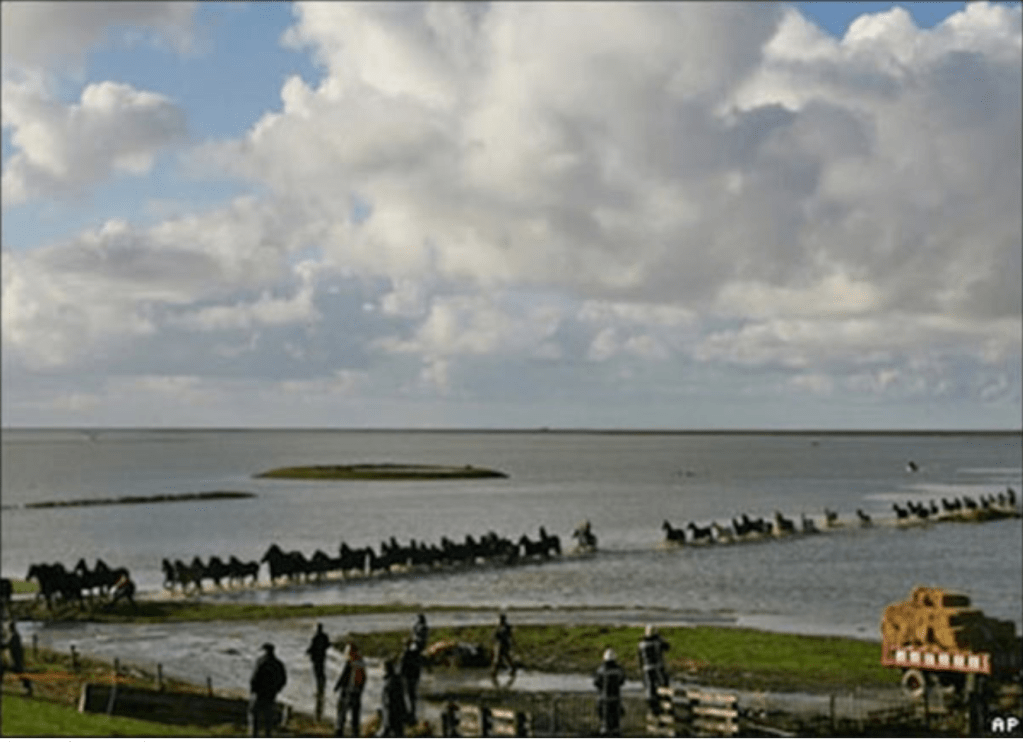
In 2006, in the Netherlands, about 100 horses were trapped by a flood in the middle of a rushing river on a tiny island. 18 of the horses died while the local fire department and the Dutch army both tried unsuccessfully to rescue them. Then four women on horseback rode to the rescue. Watch the movie.

My friend Lynn Nakkim, who owns a ranch with one hundred horses, and has midwifed and trained most of them, told me, “Horse whispering is the name men gave to the horse-training technique women have been using for the past  8,000 years.” 

A Great Day in Harlem


If one photograph could convey the jazz scene in New York City in the late 1950’s, this would be it.

Around ten one morning in the summer of 1958, 57 musicians representing three generations of jazz history showed up at 126th Street, between Fifth and Madison Avenues in Harlem to be photographed by Art Kane, a freelance photographer working for Esquire magazine. The photo was eventually published in the January, 1959 issue. This photo also became the basis of a documentary film produced by veteran radio producer, Jean Bach of New York. The film won an Academy Award for Best Documentary Feature in 1994.  It’s available on DVD and VHS. 

It was at a screening of this film in the spring of 1996 that I first saw avant-jazz legend Joe Gallivan, who had been part of the jazz scene during that time in New York City, in concert on Maui.  By the end of that year, we had begun to find our way as a couple.

Molly Ivins, Farewell

By John Nichols
The Nation

Wednesday 31 January 2007

Molly Ivins always said she wanted to write a book about the lonely experience of East Texas civil rights campaigners to be titled No One Famous Ever Came. While the television screens and newspapers told the stories of the marches, the legal battles and the victories of campaigns against segregation in Alabama and Mississippi, Ivins recalled, the foes of Jim Crow laws in the region where she came of age in the 1950s and ‘60s often labored in obscurity without any hope that they would be joined on the picket lines by Nobel Peace Prize winners, folk singers, Hollywood stars or senators.

And Ivins loved those righteous strugglers all the more for their willingness to carry on.

The warmest-hearted populist ever to pick up a pen with the purpose of calling the rabble to the battlements, Ivins understood that change came only when some citizen in some off-the-map town passed a petition, called a Congressman or cast an angry vote to throw the bums out. The nation’s mostly widely syndicated progressive columnist, who died January 31 at age 62 after a long battle with what she referred to as a “scorching case of cancer,” adored the activists she celebrated from the time in the late 1960s when she created her own “Movements for Social Change” beat at the old Minneapolis Tribune and started making heroes of “militant blacks, angry Indians, radical students, uppity women and a motley assortment of other misfits and troublemakers.”

“Troublemaker” might be a term of derision in the lexicon of some journalists – particularly the on-bended-knee White House press pack that Ivins studiously refused to run with – but to Molly it was a term of endearment. If anyone anywhere was picking a fight with the powerful, she was writing them up with the same passionate language she employed when her friend the great Texas liberal Billie Carr passed on in 2002. Ivins recalled Carr “was there for the workers and the unions, she was there for the African-Americans, she was there for the Hispanics, she was there for the women, she was there for the gays. And this wasn’t all high-minded, oh, we-should-all-be-kinder-to-one-another. This was tough, down, gritty, political trench warfare; money against people. She bullied her way to the table of power, and then she used that place to get everybody else there, too. If you ain’t ready to sweat, and you ain’t smart enough to deal, you can’t play in her league.”

My Concert at the Paisley Violin


On Saturday, January 27th, 2007. I played two hours of my music at the Paisley Violin, a supremely hip small eatery on Grand Avenue in the downtown arts district of Phoenix, functioning as a second living room for the boho denizens of the neighborhood. Musician Chris Warmuth, who lent me a PA system which he gallantly carried from house to car to club to car to house for me, ran into half a dozen friends while we were there. My new friend Sarah Curtis came to this show, too, to sell stuff from my table while I was playing.


This being a CD release party for my most recent recording, I played and sang ten jazz, blues and gospel songs and two jazz standards from What Living’s All About, accompanied by a version of the final mix from the CD that excluded my recorded vocal and guitar parts.

Well, all but one song. Nature Boy was recorded rubato (outside of a time signature), improvised in the studio by me, upright bassist John B. Williams, and percussionist Enzo Tedesco, all of us playing at the same time. In order to perform the song with the recording minus my voice, I would have had to memorize the entire improvisation and duplicate exactly what I sang on the recording. That kind of misses the whole point of doing an improvisation, which is to spontaneously create music together that has never existed before. So, Nature Boy was relegated to being played (as a finished recording) during one of my breaks.


I played on an elevated stage surrounded by wonderful nature photographs by Greg Lansing, whose show lasted the month of January. After my second set, Chris, Sarah and I had a delicious meal at the bar.


I brought a full panoply of my wares, and Gina, the manager at the Paisley Violin, offered to keep the table set up and sell the goods on it during the week to help publicize my second show at the Paisley, next Friday, February 2nd, from 7 to 8 PM on the evening of the First Friday monthly open gallery art walk.

Panel Discussion on Northern California Communes at the CSA Conference


Arthur Kopecky and Alicia Bay Laurel at the panel discussion at the CSA conference.

Listen to the panel discussion.

Alicia Bay Laurel, Ramon Sender, Delia Moon and Arthur Kopecky, four authors who each lived in more than one commune during the late ‘sixties and early ‘seventies in northern California, discuss the significance of those communities at the 30th annual conference of the Communal Studies Association, an international group of scholars who present papers on communal societies of many eras and locales.


Ramon Sender, Delia Moon, Arthur Kopecky at the panel discussion.

The panel is chaired by Timothy Miller, a much-published author on communal societies, professor at University of Kansas, and founder of the Communal Studies Association. The panel discussion took place on September 30, 2006 at the Marconi Conference Center in Marin county, California, a site which was once a commune run by Synanon.