



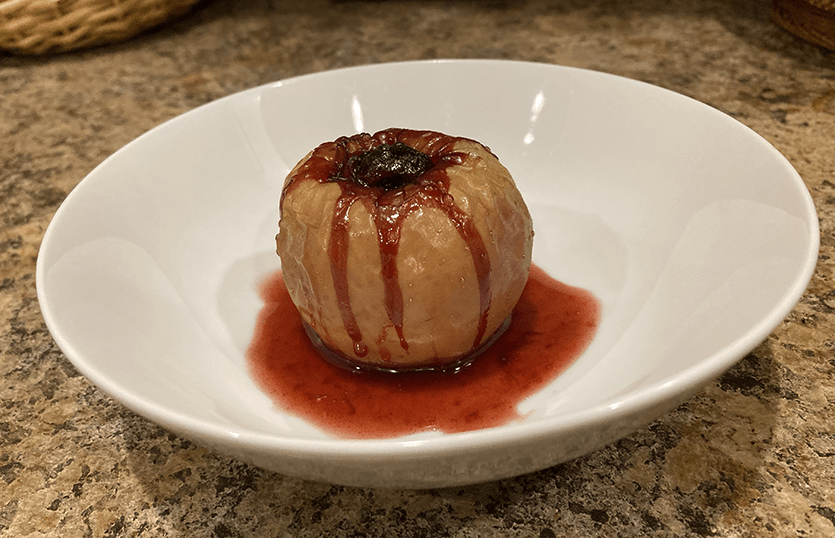
While this fragrant and flavorful dessert needs no excuse appear on your menu, if you are in the USA, the weekend after Thanksgiving is an ideal time to make it, to use up whatever cranberry side dish you might have left over. This particular batch was made with the last of the Cranberry Relish á la Persephone that I had concocted on November 22, 2023.
Step One: Line a baking pan (or a cast iron skillet) with baking parchment. Wash and dry some sound (firm and unbruised) organically raised apples, core them, and place them on the parchment. Figure one small apple for each two tablespoonsful of cranberry sauce, relish, etc. that you have on hand. If you will be baking big apples, figure 3 tablespoonsful per apple.
Then pre-heat the oven to 375 degrees.
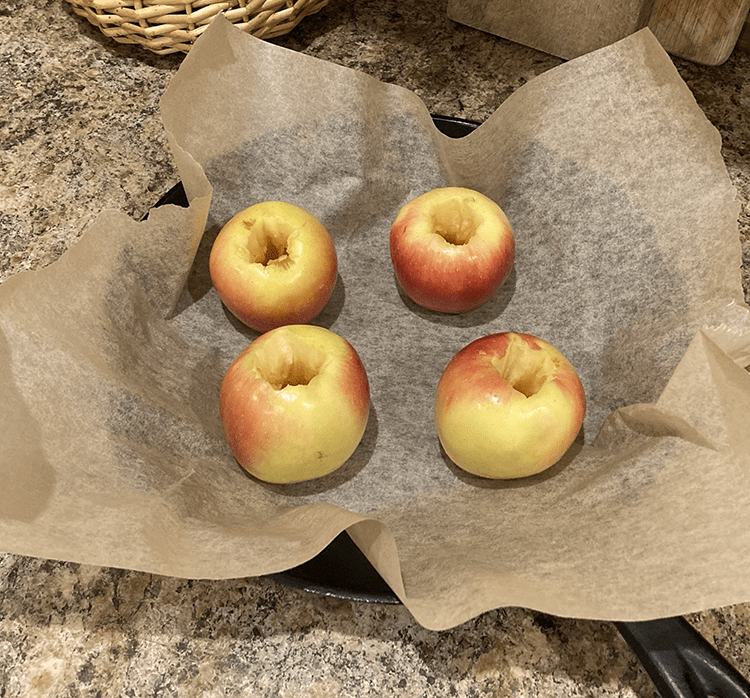
Step Two: Make the filling and fill the apples. The amount of sweetner depends on what sort of cranberry side dish you are using. If it’s a cranberry sauce that is already sweetened, you might not need to add any sweetner at all. The trick is to balance the natural sourness of the cranberries with enough sweetness to make a satisfying dessert. In the case of my cranberry relish, made with cooked whole cranberries, I kept mixing in half-droppers-full of stevia liquid extract until the sweet/sour balance was pleasing to my palate. You might prefer using another sweetner – say, maple syrup, honey, brown sugar, agave syrup or monk fruit.
Then I add raisins and powdered cinnamon (also to taste), and let the mixture rest so the cinnamon and raisins soak up some of the liquid.
Then I use a narrow spoon to transport the filling into the cores of the apples, pushing it down as I fill.
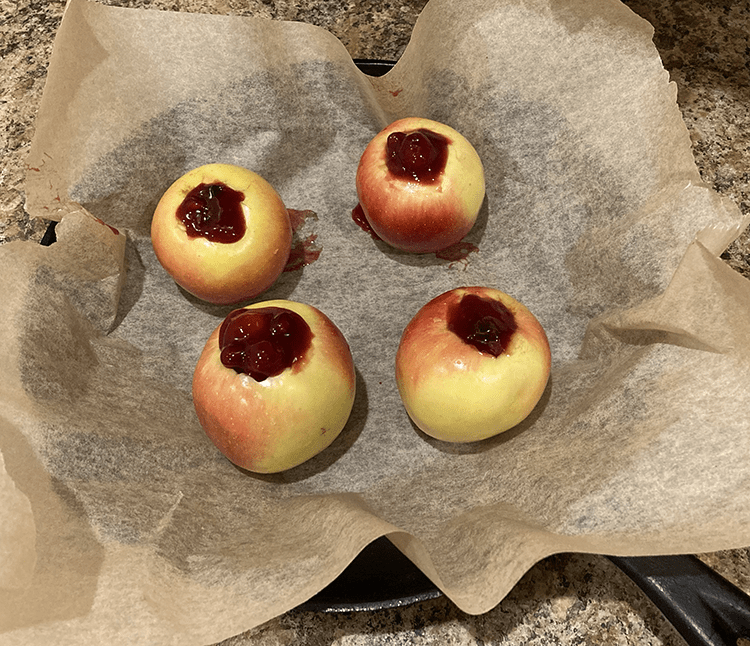
Step 3: Bake the apples. First trim the excess baking parchment, so that it does not stand above the sides of the baking dish.
Bake until the apples are soft enough that you can easily insert a fork.
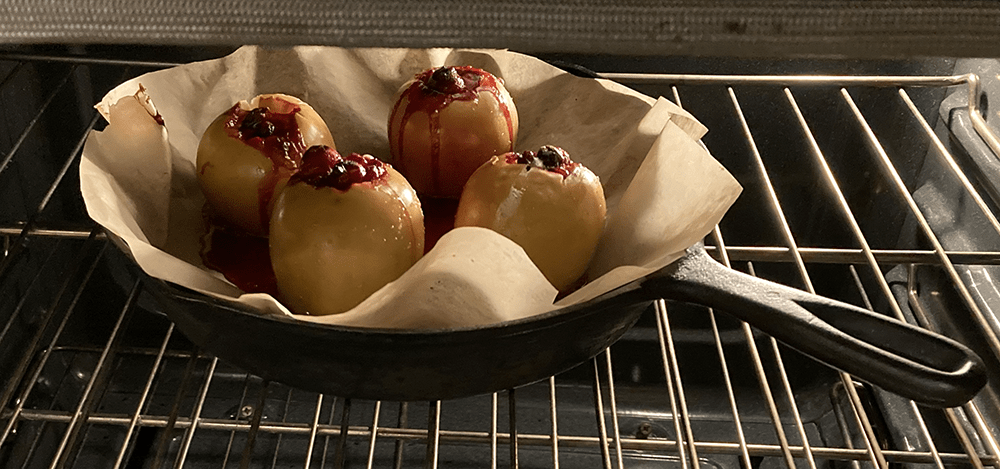
Step 4: Cool the apples (at least to the point that no one will burn themselves taking the first bite!) Fresh from the oven is when they are the most fragrant, but they are also delicious at room temperature, and can be accompanied by scoop of vanilla ice cream, a whipped cream topping, or a glass of eggnog.

Step 5: Serve the apples. The sweet, spicy syrup generated in the bottom of the pan during baking can be drizzled over the apples once they are plated.


 Alicia Bay Laurel
You must be logged in to post a comment.