Cream of Cauliflower Soup Recipe


Sometimes a warm, smooth vegetable soup, something soothing, yet alkalyzing, and that requires no chewing, is what a person needs to eat, for example, after having dental surgery.

That was how this recipe came together. Joe had an emergency tooth extraction, the dentist recommended a diet of liquid or soft foods for at least two days, these ingredients were in the refrigerator when we got home, and I improvised with them.

Joe enjoyed the soup so much that he requested it again less than a week later, even though his mouth had pretty much healed. This time I wrote down the recipe and photographed the steps.

Ingredients:

4 cups organically grown vegetable broth (homemade or storebought)
2 medium-sized organically grown potatoes
1 large (or two medium-sized) organically grown yellow zucchini squash
1/2 large organically grown yellow onion
1/2 large organically grown white cauliflower
1/2 cup shedded organically grown white cabbage
Purified water to add as needed to the broth before cooking

Pour the organic vegetable broth (or stock) into the cooking pot.

Peel the potatoes.

Slice and dice the potatoes.


Slice and dice the onion.


Add the potato and onion pieces to the broth.

Cut the ends off the zucchini, and slice and dice the narrow neck.


Slice and dice the wider part of the zucchini.

Use the vegetable peeler to remove any discolored areas from the cauliflower.


With a sharp knife, remove the stem and leaves from the under side of the cauliflower.


With the sharp knife, cut off the large outer branches of the cauliflower.


From each of the outer branches of the cauliflower, pull apart the flowers and dice the stems.


Add the cauliflowerlets, diced stems, and diced yellow zucchini to the broth.


Slice and dice the white cabbage.

Add cabbage to broth and enough purified water so that broth reaches 1 1/2 inches below the top of the vegetables, which will supply more water to the soup as it cooks. Bring the mixture to a boil (about 10 to 12 minutes), and then turn the heat down to the lowest level at which it sustains a low boil. Simmer until the vegeables are soft (about 35 minutes).

Move the soup into a food processor.


If the amount of soup exceeds the liquid capacity of the food processor, process it in two batches.


Reheat the cream of cauliflower soup over the lowest flame before serving.

Optional seasonings to offer once the soup is served in bowls:

Himalayan pink salt, organic black pepper, flake-type nutritional yeast, organic extra virgin olive oil, organic garlic powder, organic savory herbs (sometimes called poultry seasoning).

If you wish to add a spoonful of white or yellow miso to your bowl of soup, first dilute the miso by stirring it into a half cup of soup with a fork or chopsticks in a mug or small bowl before adding it to the bowl of soup.

Of course, crackers of all kinds make a good foil for soup. We tend to favor puffed organic brown rice cakes at our house.

Turns out it’s delicious as a cold summer soup, too.

Three weeks later: I required a tooth extraction, too! After a day of ice packs and napping, I woke up the next day with a lot less pain, and hungry, so I made this creamy soup. This time I had some carrots on hand, so added a couple of small ones to the mix of vegetables and got a golden yellow soup with a slighty richer taste.

How to Bake a Delicious Apple Pie Without Sugar, Dairy or Gluten

A slice of the apple pie I made for the birthday of my partner, Joe Gallivan, on August 9, 2024.
He’s got a gluten/wheat allergy. I’ve got a dairy allergy and avoid sugar. But I revise recipes to accommodate our dietary needs
. The topping on the pie is So Delicious (brand) Coconut Milk/Vanilla Bean dairy-free, low sugar, frozen dessert.

Here is a my revised version of a recipe I found online, with my substitutions:

Gluten-free pie crust (see my recipe here). Don’t bake the crust until the apple filling is added.
2 to 2 1/4 pounds of dense, crisp, organically grown apples
1 1/2 teaspons of organic cinnamon powder
8 tablespoons of organic unsalted plant-based butter (or organic unsalted dairy butter)
3 tablespoons of organic gluten-free all-purpose flour or organic tapioca flour
1/4 cup purified water
1 cup of monk fruit and/or erythritol natural granulated sugar substitute (I used Truvia Sweet Complete, a natural sugar substitute recommended by Martha Stewart in her recipes.)

1. Make two 9″ pie crusts and chill them in the freezer until baking time.

2. Peel, core and slice thin, all of the apples.

Slice off a tiny piece of skin the make it easier to start peeling the apple with a peeler.


Peel off all of the skin except above and below the core.

You’ll need a big bowl for the slices of apple. To core the apple, cut away the pieces surrounding the core, then compost the core, or feed it to some happy ungulate.


Cut thin slices from the bigger pieces cut off the apple. and collect them in the bowl.

Add 1 1/2 teaspoons of powdered cinnamon to the apple slices.


Stir well, so that the cinnamon coats every apple slice.

Preheat the oven to 425 degrees Fahrenheit.


Melt the butter in a medium sized saucepan over low to medium heat.


Tapioca flour/starch works well for those avoiding grains or gluten.


Whisk the flour into the butter and simmer for one minute, whisking constantly (so no lumps!)


Whisk in 1/4 cup water and 1 cup of natural granulated sugar substitute. Bring to a boil, then reduce heat and continue simmering 3 minutes, whisking constantly.


Stir sauce into apple slices to coat all of them evenly.


Spoon the filling into the two unbaked pie crusts.


Place the two pies into the oven, already preheated to 425 degrees Fahrenheit.
Place a baking sheet or some aluminum foil below the pies to catch drips if they bubble enthusiastically.


Bake at 425 degrees Fahrenheit for 15 minutes (use a timer if you have one).


Bake at 350 degrees Fahrenheit for 45 minutes (or until apples are soft and filling is bubbling.)


Let pies cool at room temperature for one hour before serving.

Ginger and Pau D’Arco Tea

It’s getting chilly here in the desert – low of 29 degrees F tonight, high of 55 F tomorrow. Lots of colds and flu going around, these days. So, an immunity-boosting, warming cup of herb tea is called for.

This one is pretty simple: Obtain some fresh ginger root, preferably organically grown, rinse well to clean it, and cut it into small pieces. Don’t peel it, but do remove any parts that are damaged. Place three tablespoonsful of diced ginger in a stainless steel or ceramic pot, add a quart of pure water, and bring the water to a boil. Then remove the pot from the heat and add a tablespoonful of pau d’arco bark. Let it steep, covered, for 30 minutes, and then strain the tea into a teapot or mugs. Optionally sweeten to taste with stevia extract, honey or your sweetener of choice.

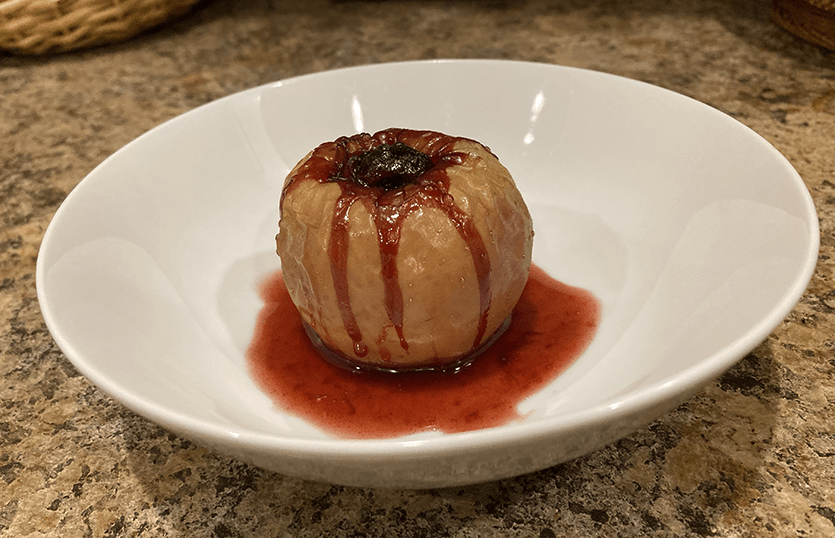
Baked Apples Stuffed with Cranberry Sauce, Cinnamon and Raisins

While this fragrant and flavorful dessert needs no excuse appear on your menu, if you are in the USA, the weekend after Thanksgiving is an ideal time to make it, to use up whatever cranberry side dish you might have left over. This particular batch was made with the last of the Cranberry Relish á la Persephone that I had concocted on November 22, 2023.

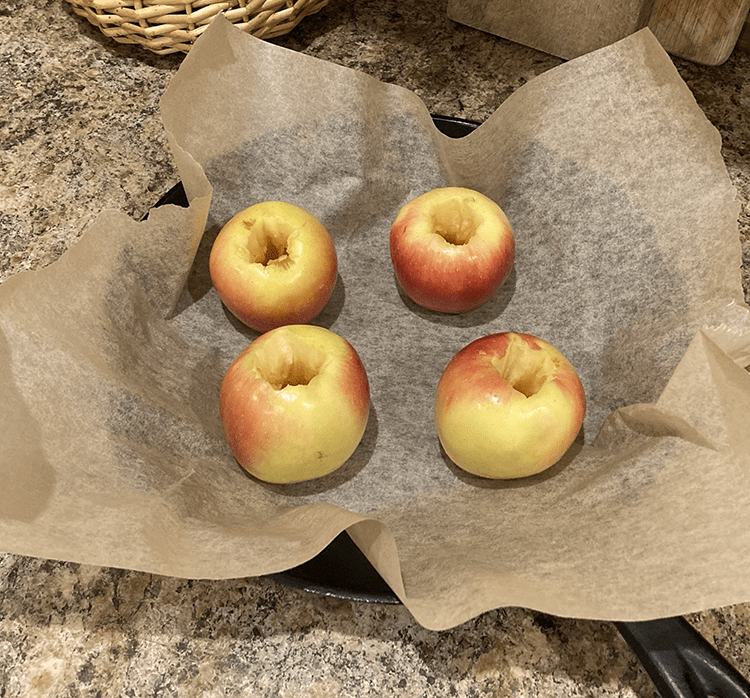
Step One: Line a baking pan (or a cast iron skillet) with baking parchment. Wash and dry some sound (firm and unbruised) organically raised apples, core them, and place them on the parchment. Figure one small apple for each two tablespoonsful of cranberry sauce, relish, etc. that you have on hand. If you will be baking big apples, figure 3 tablespoonsful per apple.

Then pre-heat the oven to 375 degrees.


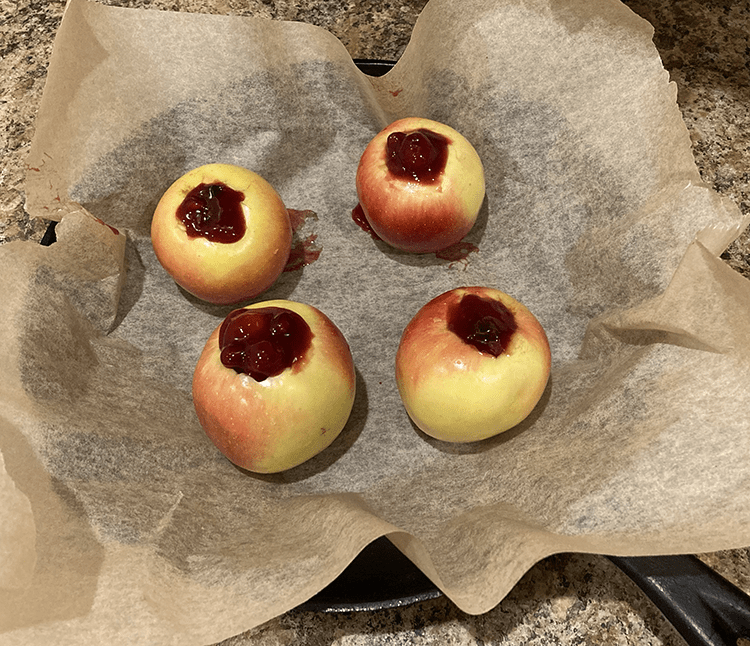
Step Two: Make the filling and fill the apples. The amount of sweetner depends on what sort of cranberry side dish you are using. If it’s a cranberry sauce that is already sweetened, you might not need to add any sweetner at all. The trick is to balance the natural sourness of the cranberries with enough sweetness to make a satisfying dessert. In the case of my cranberry relish, made with cooked whole cranberries, I kept mixing in half-droppers-full of stevia liquid extract until the sweet/sour balance was pleasing to my palate. You might prefer using another sweetner – say, maple syrup, honey, brown sugar, agave syrup or monk fruit.

Then I add raisins and powdered cinnamon (also to taste), and let the mixture rest so the cinnamon and raisins soak up some of the liquid.

Then I use a narrow spoon to transport the filling into the cores of the apples, pushing it down as I fill.


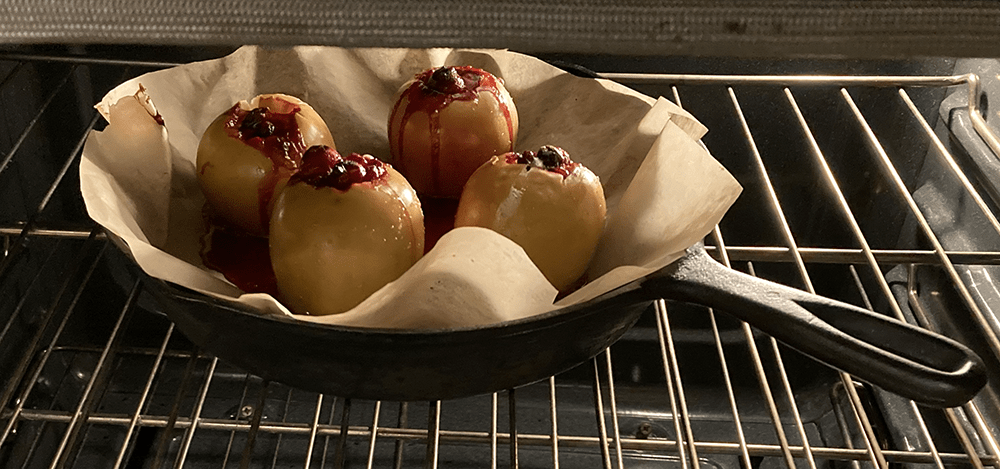
Step 3: Bake the apples. First trim the excess baking parchment, so that it does not stand above the sides of the baking dish.

Bake until the apples are soft enough that you can easily insert a fork.


Step 4: Cool the apples (at least to the point that no one will burn themselves taking the first bite!) Fresh from the oven is when they are the most fragrant, but they are also delicious at room temperature, and can be accompanied by scoop of vanilla ice cream, a whipped cream topping, or a glass of eggnog.


Step 5: Serve the apples. The sweet, spicy syrup generated in the bottom of the pan during baking can be drizzled over the apples once they are plated.


Warm and Vivid Autumnal Soup

I took a day off from setting up my online store, and made an vivid and warm autumnal soup.

Then, I poured some into a bowl and took this photo, with two indigenous folk art spoons from the town of Pasto in the southern central Andes in Colombia. I bought them as a gift for my mother in 1972, who displayed them on the wall of her dining room until she transitioned in 2007, after which they resumed their duties, watching over the dining rooms I have used since then.

This recipe was improvised as I went, but inspired by recipes I had tried previously. I am fortunate to live where I can easily obtain organically grown ingredients, and I used them here exclusively.

I soaked a cup of red lentils overnight in four cups of purified water. The next day I rinsed off the white foam they had produced, placed them in a large pot and added water that stood twice as high as the lentils. I brought them to a boil, then removed the lid of the pot and turned the flame down to the minimum, and kept them simmering, stirring occasionally until the lentils were cooked soft. When the water was about to get low enough that the lentils might stick to the pot, I added a can of coconut cream, and stirred it frequently while it simmered another 10 minutes.

Meanwhile, I sliced and seeded a small butternut squash and steamed the pieces until they were soft. When they were cool enough to handle, I scooped the cooked squash out of the skins and into the jar of the food processor/high speed blender. I added a cup of the water from steaming the squash, and liquified them.

Then I blended the lentil/coconut cream mixture and a small can of tomato paste into the squash puree.

Finally, I chopped small and sauteed in coconut oil at low heat three cloves of garlic and a half of a red onion. While they were softening and releasing their aromas, I added two teaspoons of cumin seed powder, a teaspoon of a good-smelling masala blend, and two teaspoons of powdered tumeric root. When it was all fragrant and soft, I added the entire contents of the sautee pan to the rest of the ingredients in the food processor, and blended it until it was smooth.

Umami Tofu Paté


Umami means “delicious savory taste” in Japanese, a taste characteristic of meat broths, dried shiitake mushrooms, fermented soy products, kombu seaweed, cheeses, and fermented or dried seafood. 

This vegan recipe’s umami tastes are imparted by flake-type nutritional yeast and white miso paste.  I can whip up a serving of it in less than five minutes, so it has become my go-to quick high protein dish when I don’t have time to cook.  I often serve it with sliced cucumbers, celery stalks, brown rice crackers, or toasted nori seaweed – or all of them!

Ingredients:

Organic tofu*
Organic white miso*
Organic nutritional yeast
Organic extra virgin olive oil

*Tofu and miso made from organically grown soybeans are crucial to this recipe.  I don’t want to poison myself with the carcinogenic herbicide glyphosate, with which genetically modified [GMO] soy beans are grown.  Virtually all soybeans, unless they are specifically grown by organic farming methods and marked so on their packaging, have been grown with glyphosate.

For each serving, I mash with a fork, a 2-inch slice of organic tofu (neither soft or hard, but somewhere between them, creating a texture like cottage cheese), and then blend in with the same fork one or two tablespoons of organic white miso (less to limit your salt intake).

Then I pour on a tablespoon (or more if desired) of organic flake-type nutritional yeast and a tablespoon (or more if desired) of organic extra virgin olive oil, and continue mixing with the fork until all is well blended.

No-bake Vegan, Gluten-free Mango (or Peach) Pie, Maybe á la Mode

08-15-20-Panama-home-raw mango pie

Joe Gallivan’s birthday was on August 9th. I usually make a mango pie for that occasion, since it coincides with the height of mango season, but, this year, even though I had all the ingredients and equipment assembled, the mangos were green, and hard as rocks.

So, we waited another six days, until they turned golden and issued their unmistakeable fragrance.

If you live somewhere that has snow in the winter, fear not. Sliced, raw, ripe peaches can be used instead of mangos.

No need to light an oven in mid-August to make this pie.

Crust: Grind in a food processor, first a cup of cashews (neither toasted nor salted), then a cup of shelled walnuts, then, finally, half a cup of de-seeded and coarsely chopped deglet dates. Combine all three in a big bowl with a big spoon, until well blended. (Substitutions: unsalted macadamia nuts for cashews, pecans for walnuts).

Form the dough into a ball (or two), and then press the dough into the shape of a piecrust into a glass piepan or a ceramic bowl. (Or you could make tiny pies in custard cups.) Press the dough into an even thickness covering the bottom and sides of the container. Don’t place it over the lip of the piepan; it will just break off when you are trying to serve it.

Filling: Cut up the mangos inside a bowl, because, if they are ripe, they will exude a lot of juice, which you will want to capture and use. Place the bite size pieces of mango inside the prepared crusts, and measure the juice into heavy pot or a double boiler. Add more liquid, if necessary, to make a total of two cups – coconut milk, juice of another fruit, or purified water will all work. Add two droppers full of stevia liquid (or a commensurate amount of another sweetener, if you prefer), and two tablespoons of agar-agar (kanten) flakes.

Bring to a boil, and then simmer for five to ten minutes – stirring gently – until the agar-agar is completely dissolved.

Then pour the hot liquid over the mango pieces to within 1/2″ of the top of the pie shell.

Place the pies into the refrigerator, covering each one with an inverted ceramic plate, and let them chill for at least an hour.  Overnight works, too.

If you want to serve with ice cream on top, plate the pie slices first, then blend frozen peeled bananas and smooth cashew butter in your food processor and scoop out the ice cream immediately onto the pie slices and serve.

Gluten-free Maple Nut Muffins (Re-purposing Leftover Gluten-free Baked Goods)

Preheat the over to 380 F.

Line muffin pan with unbleached paper muffin cups (or make muffin cups from squares of unbleached oven parchment paper)

Break leftover gluten-free baked goods into pieces, tossing them into the bowl of a food processor. I used cinnamon-raisin bread to make these muffins tonight, but any sweet (as opposed to savory) flavored bread, roll, cake, cookie or pastry (or a combination) would work as well. Use the food processor to reduce the baked goods to crumbs.

For every cup of crumbs, add:

A beaten organic pasture-raised egg (this gives batter the same expanding flexible structure while baking that gluten does)

1 or more tablespoons of maple syrup (less sweetener needed if the crumbs contains cookies or pastries)

¼ cup of raw organically grown walnuts or pecans, pulverized in the food processor
1 tablespoon of organic virgin coconut oil

Optional: ¼ teaspoon of cinnamon (if you are using cinnamon raisin bread crumbs, you don’t need it)

¼ cup pure water (the amount depends on the inherent moisture of the ingredients. Just add a teaspoon at a time while blending, until the batter is thicker than pancake batter, but more liquid than cookie dough)

Once you have a thick batter, stop the food processor, and stir some organically grown raisins and dried cranberries into the batter.

Spoon the batter into muffin cups, filling them about 9/10 full. They will rise, but not a lot.

Bake about 20 minutes (the sides and tops should brown a little bit).

Leave the muffins in the muffin tin until cool enough to handle, then move them to a rack to cool completely – or, serve them warm.

My Dozen Vegetable Plus Avocado Green Salad Recipe

LOTE salad illustration

 Salad illustration from Living on the Earth by Alicia Bay Laurel

(Please insert the words “organically grown” in front of each ingredient. Yes, I know tomatoes and olives are not really vegetables.)

Lettuce (my fave is red lettuce, but whatever you prefer)
Arugula or spinach or dandelion greens or baby sunflower greens
Grated carrots (I’m loving the ones in a variety of colors)
Grated daikon root and/or grated beet
Sliced radishes (also loving the ones in a variety of colors)
Sliced cucumber (usually Persian or hot house)
Sliced and chopped red cabbage
Cilantro leaves (whole) and/or basil leaves (sliced)
Scallions (cut into 1/4 inch pieces)
Sauerkraut (preferably homemade, but packaged is OK)
Pitted olives (I like green, because they don’t stain my teeth)
Cherry tomatoes (also love them in a variety of colors)

(Of course, all of the ingredients are optional, depending on what you like and/or can medically tolerate.)

I like to offer a half avocado (Hass, mostly), to each person having the salad. If the avocados are small, I offer a whole one.

Dressing: two parts olive oil to one part freshly squeezed lemon juice (or apple cider vinegar with “the mother”), seasoned with freshly pressed garlic and pink Himalayan salt or sea salt. Sometimes I soak (and remove) a branch of fresh rosemary from my garden in the olive oil before adding the oil to the dressing.

Sometimes I boil, chill in ice water, and then peel, a couple of seven-minute (pasture-raised) eggs and slice them into the salad, making it into a one-dish meal. Other times I add cubes of baked tofu or cooked tempeh instead eggs for protein.

Borcht Salad for a Hanukkah Latke Party

12-21-14-CA-LA-Lyndia's latkethon-borcht salad

Tomorrow I am going to the Hanukkah latkethon of Lyndia Lowy, my friend-since-we-were-12, who has been frying potato pancakes (and carrot, cauliflower, sweet potato, and zucchini pancakes) for weeks (and freezing them). Usually fifty or more of her best friends show up. Our tradition is that I bring a massive tossed salad of my own recipe, which, because of its similarity of ingredients to borcht soup, I call Borcht Salad.

My feeling is: If everything else on the menu is oily, hot, starchy and golden in color, then the complementary dish should be cool, crunchy, spicy, sweet, sour and deep maroon and purple – and made from super fresh, chilled, organically grown produce.

I use a Champion Juicer without the lower screen or plate, so the veggies are quickly shredded by the rotating blades. A food processor with shredding set-up works well, too. The Champion Juicer just makes it, well, juicier. However, it does NOT mince a red onion; that job is best done with a good sharp food prep knife and a cutting board.

Unless I have a huge serving bowl, I like to prepare the vegetables ahead in four equal bagsful, so that the next salad can be quickly put together when the serving dish is empty, or serve the salad in four large bowls along a banquet table.

Machine grate and divide into four parts in four zipper bags:
3 large beets, peeled and cut into long pieces that will fit into the round hopper of the Champion Juicer.
5 pounds of carrots, scrubbed and tops and tips cut off
3 pounds of daikon radish (optional), scrubbed and tops and tips cut off
1 whole, small red cabbage, with the stem removed, cut into long pieces that will fit into the round hopper of the Champion Juicer.

In a separate bag place:
1 whole red onion, peel, tip and top removed, cut into quarters and then minced

In 4 separate bags, place:
4 whole red leaf lettuces (one per bag): each leaf washed and dried in salad spinner, then torn into pieces by hand.

To assemble: pour the contents of one bag of shredded vegetables and one bag of torn lettuce into a large serving bowl and toss with minced red onion, extra virgin olive oil, balsamic vinegar, sea salt and black pepper.