


Book trailer for the new English language edition, published in October 2021:
You can obtain a new copy of Being of the Sun here!

Interview of Alicia Bay Laurel on “Natural Born Alchemist” podcast about Being of the Sun:
https://www.naturalbornalchemist.com/episodes/2021/11/29/episode-297-being-of-the-sun
October 1, 2021 – the first new English edition of Being of the Sun since its first edition was published in 1973 by Harper & Row, published by Echo Point Books & Media, is released, at last!
On May 1, 2020 Ramón Sender Barayón and I signed a contract for the first English edition since 1973 of our book, Being of the Sun, with Echo Point Books & Media, a small publisher based in Brattleboro, Vermont.
On December 31, 2018: El Mundo, one of the most esteemed journals in Spain, published an article about Ramón Sender Barayon, and the documentary film about his life and work written and directed by Luis Olano.
__________________________________________________
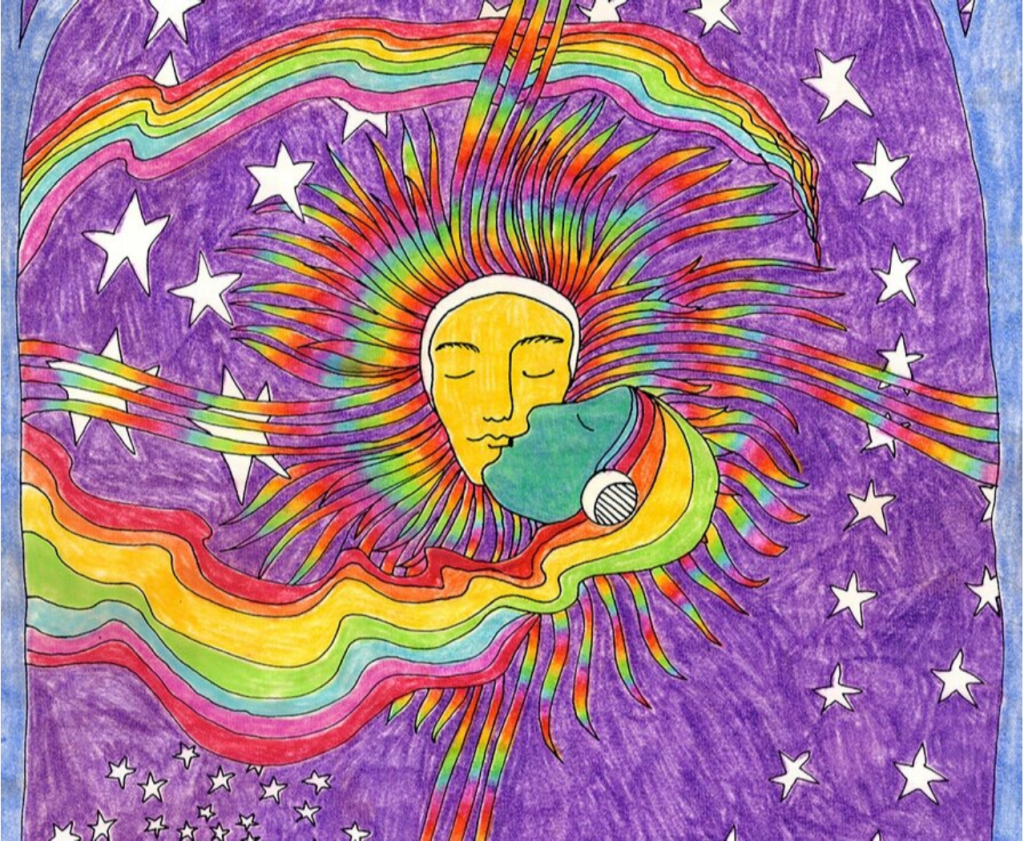
In the early ‘70’s, while living in on a mountain farm near Popayán, Colombia, Ramon and I wrote Being of the Sun, released as a companion volume to Living on the Earth. The book’s central premise is that each person can find his or her own to way to a dialogue with the Divine, without middlemen, hierarchy, or externally imposed rules of living, while borrowing practices from many traditions to enhance this dialogue. We then offered, as an example, various practices that we found useful, especially practices honoring nature and its cycles, the vibrations of music, and the life-giving light of the sun.

Ramon’s unique contributions stem from his practices of meditation on sunlight and his background as an avant-garde composer and musician. He was, along with Mort Subotnick, Pauline Oliveros and Terry Riley, one of the composers who formed the San Francisco Tape Music Center in the early 1960’s, and collaborated with audio engineer Don Buchla and Mort Subotnick in the invention of first synthesizer built on the West Coast, the Buchla Box (which was contemporary with the Moog, built on the East Coast).

My illustrations in Being of the Sun are far more lush, imaginative and colorful than those in Living on the Earth, and I bravely offered a drawing of a beautiful young woman defecating into a hole in the earth.
Twenty-seven years after its publication, I recorded three of the songs from Being of the Sun on my first CD, Music From Living on the Earth. In 2013, Ramón and I released Songs from Being of the Sun, a CD remastered from Ramón’s 1973 reel-to-reel tape of the two of us performing songs, chants and improvisations from our book, just before it was published. In 2015, I recorded three more of my songs first published in Being of the Sun on my seventh CD, More Songs From Living on the Earth, and, in 2018, on my eighth CD, Alicia Bay Laurel: Live In Japan, I perform a medley of the four chants for the solstices and equinoxes. I also performed this medley in the film I made in collaboration with filmmaker Luis Olano, of my live one-woman two-act storytelling and musical stage performance, Living on the Earth – The Musical.
If you scroll down, you’ll find a chart I made for the new edition of Being of the Sun, showing the pages on which the songs, chants and improvisations appear, and the locations of existing recordings of them.

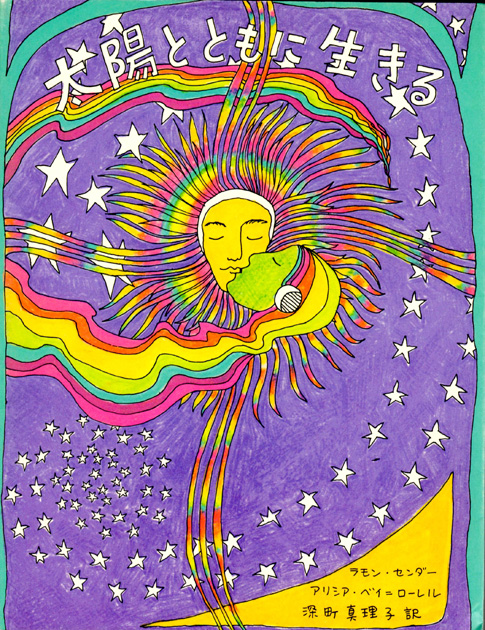
Being of the Sun was initially not well received; in 1973, Rolling Stone declared it “the worst gift book of the year.” However, in the intervening years, it became a cult classic, often referenced on Pagan/Wiccan websites, the illustrations pirated into various alternative journals. People spiritually attuned to nature, for example, practitioners of Shinto, love this book. The Japanese translation of this book has been in print from 1974 to 1980, and from 2007 to the present. And some visionaries, like author/journalist/professor of design Alastair Gordon, saw the magic in it right away: “I still cherish the original editions I have of these magical works… Being of the Sun should be required reading for all earthlings. I truly love your spirit and vision…”
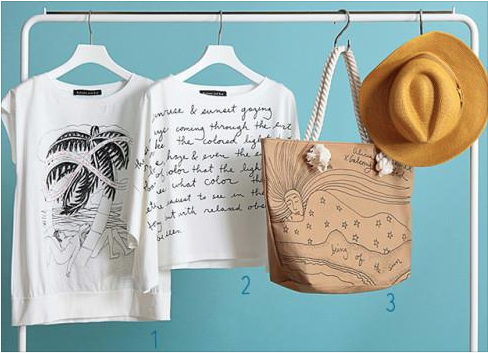
Since then, I’ve been licensing the illustrations to fashion designers in Japan. The Hayashi Sisters did a write-up in Japan Vogue Online, published May 25, 2015, about the Salon de Balcony summer fashion line (photo above), which includes clothing and accessories printed with illustrations from Being of the Sun.

Here is the synopsis/review on Amazon dot com:
“A do-it-yourself spirituality and music book, Being of the Sun (Harper and Row, 1973), is the sequel to Alicia Bay Laurel’s classic, best-selling guide, Living on the Earth (Random House 1971 and 2000.) Co-written with author, avant-garde composer and solar yogi Ramón Sender Barayón, Being of the Sun provides a guide to creating one’s own religion, and also offers a compendium of spiritual practices the authors found valuable. Similar to Living On The Earth, Being of the Sun is entirely handwritten in Alicia’s flowing cursive script and illustrated on every page with her line drawings, a shining example of her immensely influential original book design. However, unlike the simple brown lines and cover of Alicia’s first book, Being of the Sun’s design features purple ink throughout, a colorful cover, plus eight full color illustrations within. Ramón created sheet music of the original spiritual songs and chants he and Alicia wrote for the book. Being of the Sun offers a window on hippie life in the early 70’s, and remains a cult classic among nature-worshippers to this day.”
____________________________________________________________________
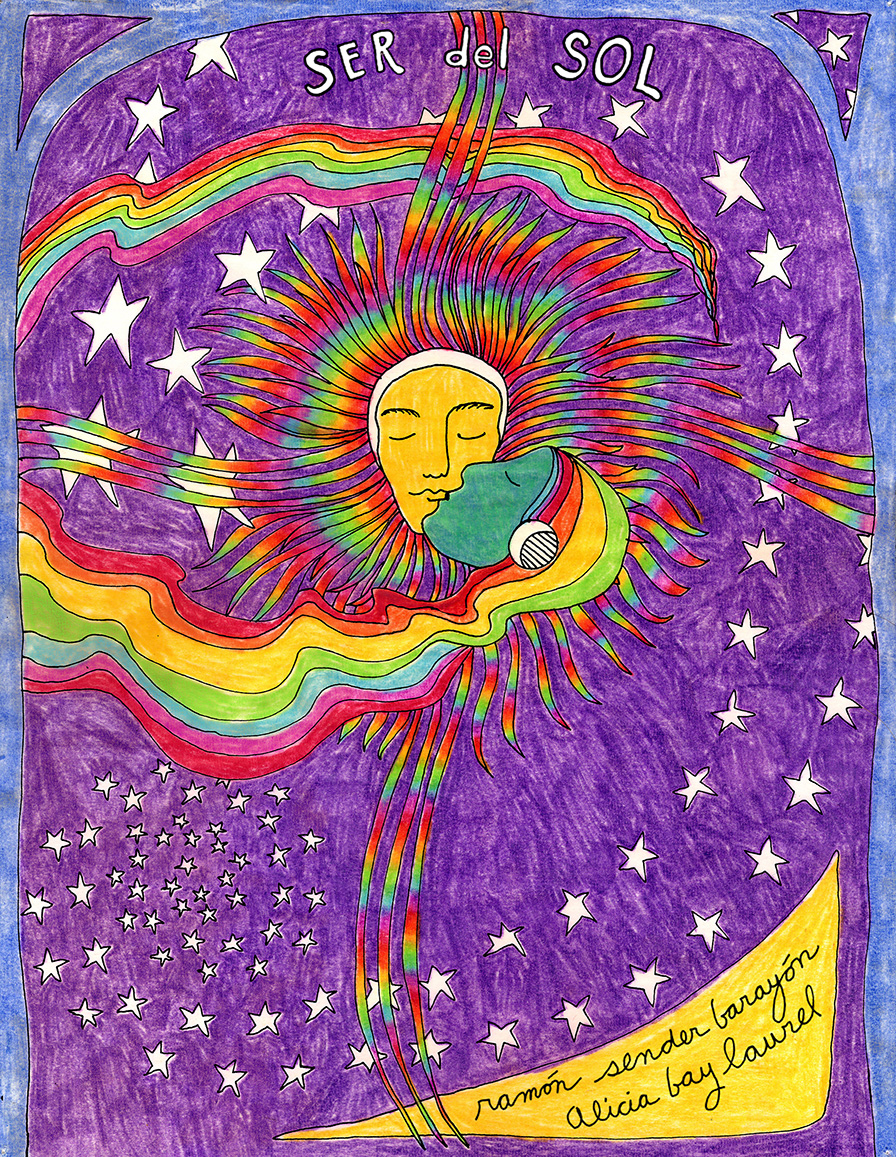
Here is the cover for the still unpublished Spanish edition. Still hoping to release it!
______________________________________________________________
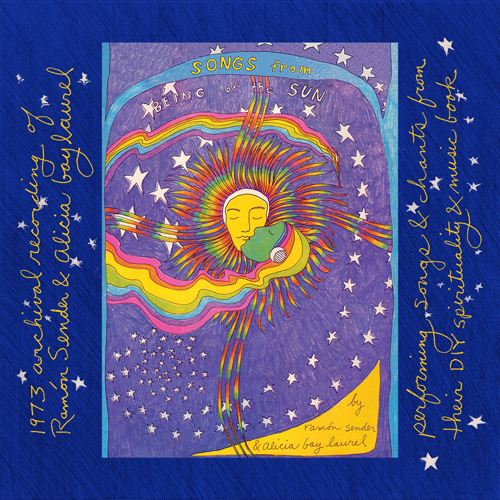
In 2013, Indigo With Stars, Inc. released “Songs from Being of the Sun,” a remastered version on CD of an archival reel-to-reel recording made by Ramón Sender Barayon in 1973, of me and Ramón performing some of the sacred nature chants we created for Being of the Sun, just before it was published. It’s available as a physical CD here.
___________________________________________________________________________
5 star review on CD Baby of “Songs from Being of the Sun” by Gordon Kennedy, author of Children of the Sun, an astonishing book that reveals the 19th century European roots of the hippie movement in the USA:
“In The Sunshine Of Your Love”
“Being of the Sun is an enchanted Solar Mass of relaxing, charming, seductive sounds. If I could pop into the book version like a superflex Gumby, this musical soundtrack would rejuvenate me – and I can’t wait to meet all of the colorful sun children. I visualized Gods-dog and even she sports a nice tan.
“Inside my sauna, the harmonies feed my inner sweat glands with radiant waves of helio-therapy. I surrender.”
__________________________________________________________________________
___________________________________________________________________
Here are some reviews the book, Being of the Sun, from Amazon.com, as of February 2014:

_________________________________________________________________
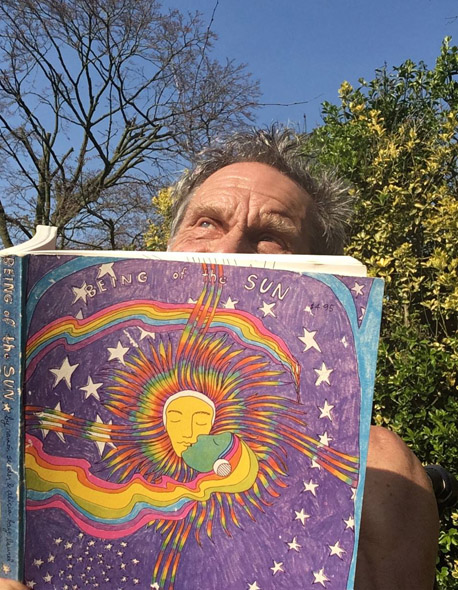
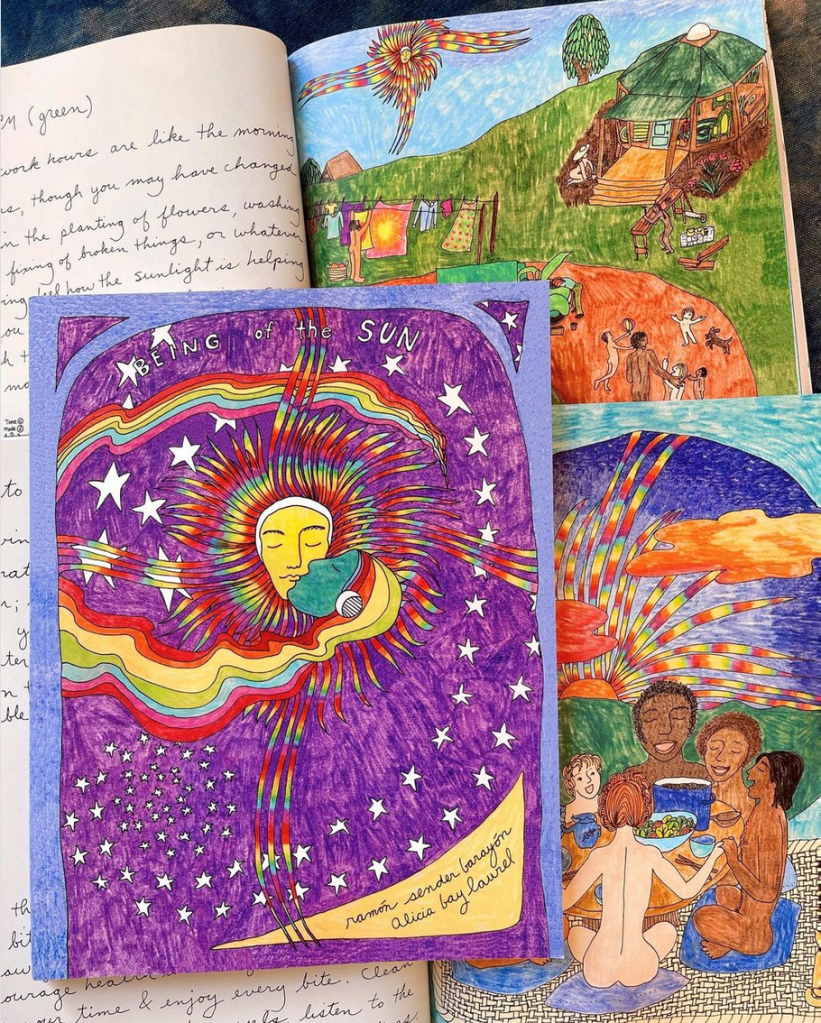
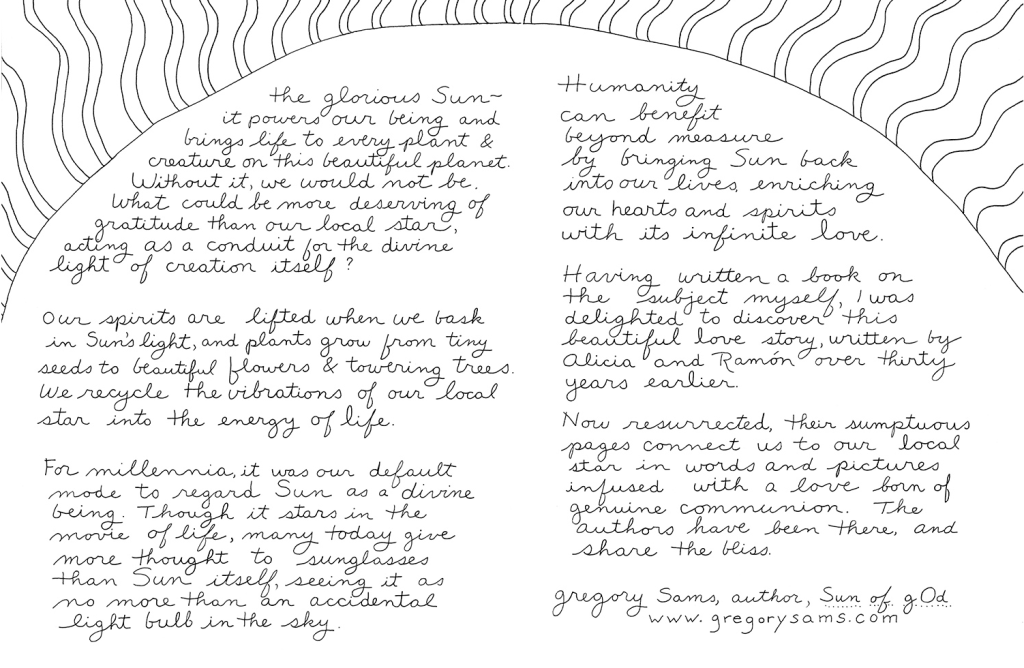
Our friend, organic food product pioneer and philosopher Gregory Sams, author of a wonderful solar praise and scientific information book called Sun of gOd, received a copy in April 2017, and posted:
“Being of the Sun” was written 25 years before Sun of gOd. This beautiful book by Alicia Bay Laurel and Ramon Sender taps into the same spirit. Inspirational! All lovingly hand-written and illustrated.
_____________________________________________________________________
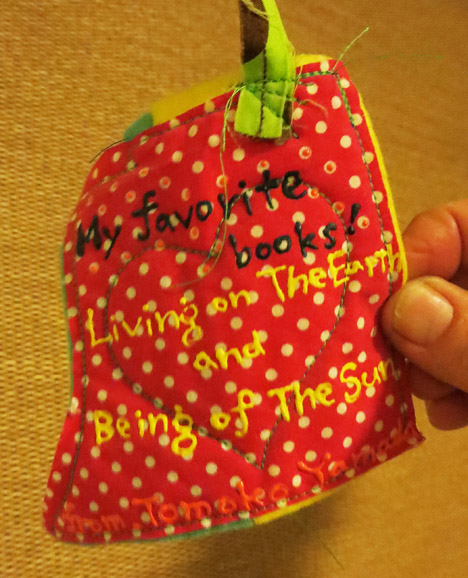
Here is a quilted fan letter from fiber artist Tomoko Yamada, which she sent to me in 2008:
_____________________________________________________________________
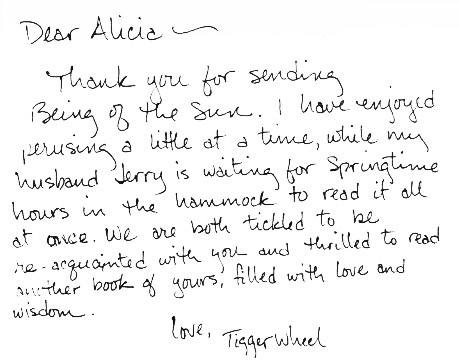
Tigger Wheel was a child living at Wheeler Ranch commune while I was writing Living on the Earth. We’ve stayed in touch all these years; now she and her husband are retired special education teachers in Texas. She sent me this a few years back:
_________________________________________________________________________
Another letter to me and to Ramon Sender Barayon from deLIGHTful Gregory Sams:
“After an initial delightful rush into it, I have now finally got to the end of your incredible testament, Being of the Sun. Sorry it took so long, but maybe I was waiting for the Summer to kick in. I’m just amazed at how tuned in you two lovers were, and to what a depth, all those years ago! Thinking that perhaps those sacraments and the light of our Sun gave a helpful and loving hand. It is at once a beautiful spiritual work of art and a practical guide to living a good life – a fitting accolade to the true light of all our lives.
“I was thinking, going through it, that there were so many pages I wanted to post-it note that it would be silly to do so. And then I see the hand-written index at the back. Astounding! The book covers so very much, even how to hand-make your own musical instruments and wind chimes. Got me wondering if you ever assembled that drone orchestra. Loved your words on food and your expression of the consciousness that pervades all. You both really deserved to retire on that book but hey, you’re happy and Sun still blesses us. I’m really happy to know that a copy of my book is in your hands. They are so different in approach, yet complement each other so well.”
Gregory Sams
Cultural Change Agent, Organic Food Pioneer
Author of Sun of gOd
__________________________________________________
VIVIENDO EN LA TIERRA & SER DEL SOL
“Living On The Earth” (Viviendo en la Tierra) es una guía o manual para la vida sostenible, comunal y alternativa creada por Alicia Bay Laurel en el rancho-comuna Wheeler, en el norte de California, a finales de los años sesenta. Fue un éxito de ventas a principios de la década siguiente, y sin ser un libro de cocina, fue incluido en un prestigioso recopilatorio como uno de los 100 libros de cocina más influyentes de la historia de los EEUU. Está traducido al japonés y desde que el año pasado Kachina Ediciones se lanzara a editarlo en español, manteniendo los dibujos originales, podemos tener esta verdadera obra de arte en nuestra biblioteca. Pocos años después de su publicación, Alicia viajó con Ramon Sender a Colombia para investigar a fondo los cultos solares y en 1973 publicaron juntos otra maravilla: “Being Of The Sun” (Ser del Sol), una especie de manual para crear tu propia religión y vivir de una forma más consciente con la naturaleza. Está construido como un diario, e incluye las partituras y los cánticos asociados a diferentes rituales. No tuvo el mismo éxito que su predecesor, y la revista Rolling Stone llegó a catalogarlo como “el peor regalo que puedes hacer estas navidades”. A nosotros nos parece sin embargo, además de una obra de arte, un documento histórico de gran valor. Muy recientemente hemos conocido la fantástica noticia de que Kachina Ediciones se va a encargar de su edición en español para el próximo verano.
Luis Olano
Writer and Director of the documentary, “Sender Barayon: A Trip into the Light”
December 2018
_________________________________________________________
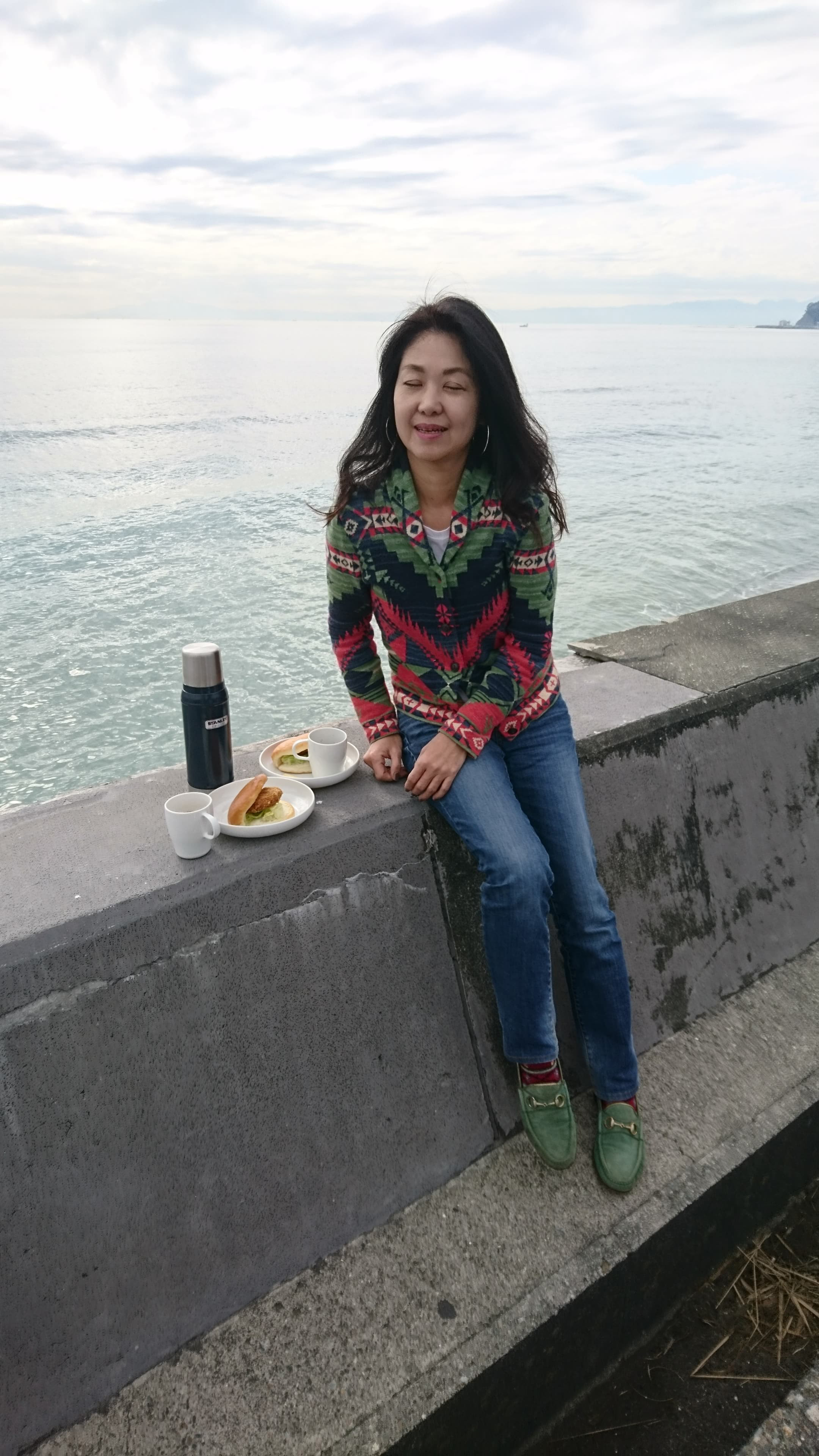
その黄色の本は(たぶん ボロボロになった)今見つからない。その次にでた「太陽とともに生きる」だけ今、手元ある。
ローレルの葉っぱが好きで この名前をつけたことも書いてあった。
真理をいつもとなりでささやいてくれた本だった。
一緒に行かないかしら✨
That Yellow book [“living on the earth”’] I can’t find it now.
The next, “being with the sun” is now on hand.
I liked Laurel’s leaf, and it was written that I put this name on it.
It was a book that was always whispered and whispered to the truth.
I wonder if I’m going to go with you ✨
Ai Kaga
__________________________________________________________________________
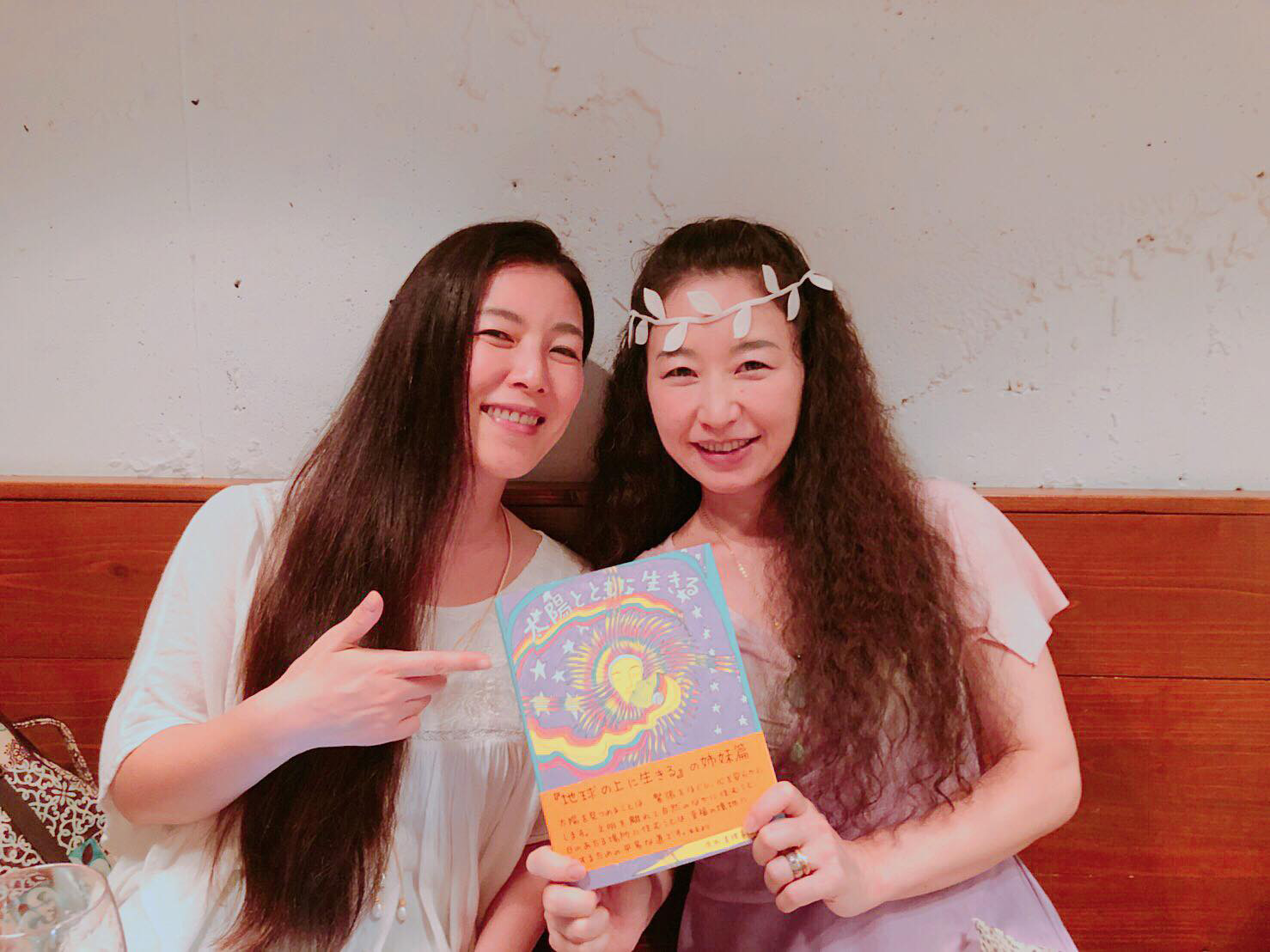
Singer-songwriter Keiko Ao Aqua Jimbo and her best friend, Sen, love Being of the Sun!
_______________________________________________________________________
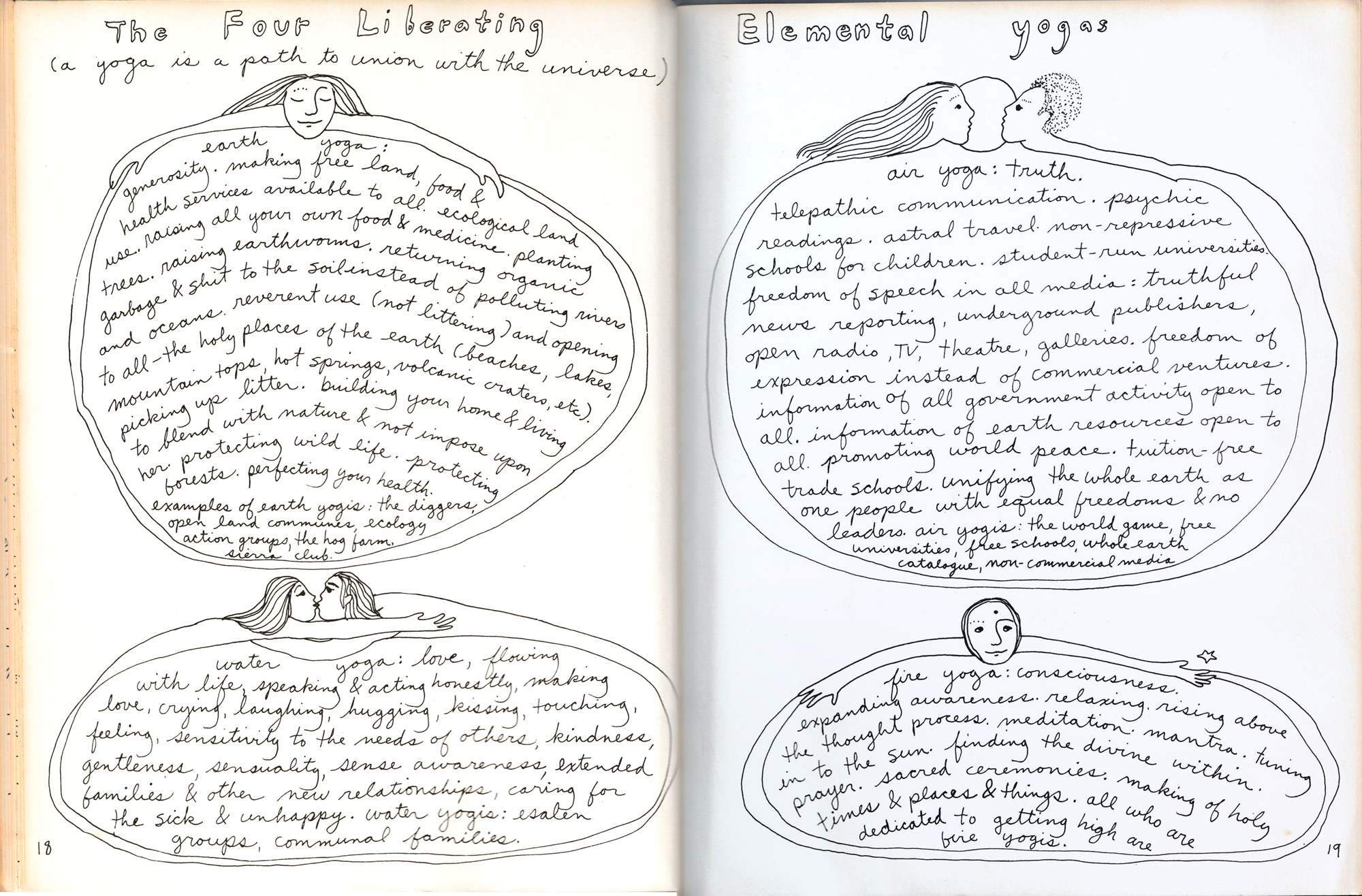
Certain books influenced me profoundly as a young teenager. I remember pouring over The Last Whole Earth Catalog and planning a theoretical venture into the wilderness. When I was thirteen, my brother gave me a book called “Being of the Sun”. I studied that book for months and began a process of developing my own traditions as a result. I don’t know what happened to my original copy, but a few years ago, I found a new one. Here are a couple of pages:
Suzie Hall Rosse
Alliance For Sustainable Communities – Lehigh Valley and Morning Star Center
Bethlehem, Pennsylvania
_________________________________________________
That book was my bible as a teenager!
I colored in it and hung out with it in a sacred space I set up in my room to do my yoga…oh, that’s right! That’s where I learned many yoga poses too!
At the time, I didn’t really know anyone who shared that world with me…it was a window into my dreams for my life and really stimulated my imagination and added magic and warmth, color and joy to my days and nights….
Surma Karen Ollice
Paia, Maui, Hawaii
_____________________________________________________
I will introduce you to the book that touched the heart.
This is my forever Bible.
In the light of the sun that lives us,
Feeling the wind and nature
To live comfortably and live,
For us now
That’s exactly what I need.
The author of this book
Live by Alicia Bay Laurel
How to live primitive
Yoga, mantra and breathing
It’s new when you look at it!
It is also the magic of the scales from the eyes,
It is also my life of the past.
Alicia Bay Laurel 💛
I felt you’re really magical of using all of nature 🌈🌲💖!
One words about ‘’Mekarauroko’’ ,
the scale from the eye is a Japanese Proverb,
To see the light ,
to be awakened to the truth,
to have the scales fall from one’s eyes
are the meetings .
Thank you for blowing your wonderful wind into my life!
Ako Usugi
Yoga Instructor
Owner of Natural Style Yoga salon ナチュラルスタイルヨガサロン
Kaga, Japan
_________________________________________________________
The peacenik holy book.
Nancy Taylor
Holistic chiropractor
Charlottesville, Virginia
___________________________________________________________
I read your book, Being of the Sun, and I got inspired by the life you wrote about in this book. These days, I spend more time in nature, and it brings me much calm and peace in my mind.
Lei Aloha
Smile Communicator
Izumo, Shimane, Japan
_____________________________________________________________
I have my old copy. It has been such a beautiful influence in my life. Alicia Bay Laurel, I am truly beholden to you for your countless gifts, books that changed my life, set me on my path, and were friends to me when no one else understood. Treasured with all my heart.
Thank you.
Beth Owls Daughter
Teacher, Writer, Seer, and Dream-whisperer
https://www.owlsdaughter.com
____________________________________________________________
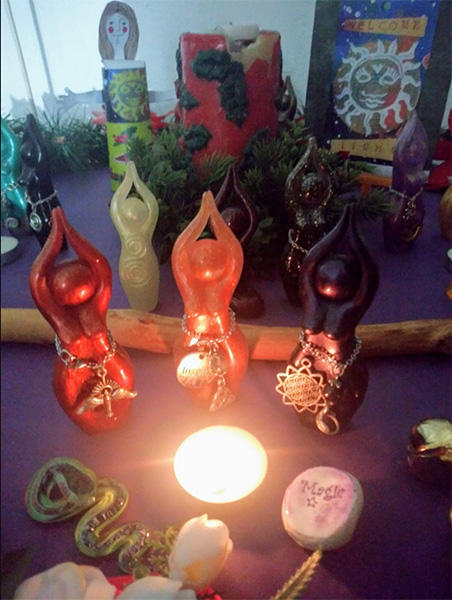
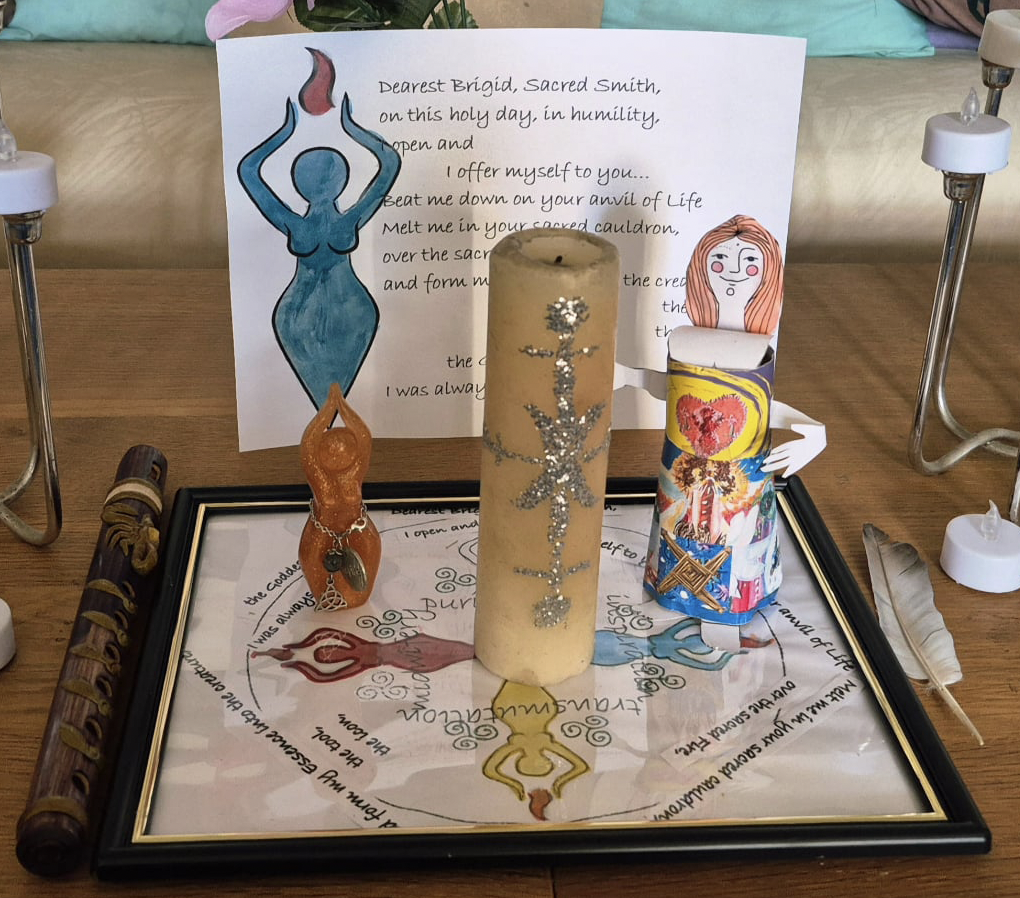
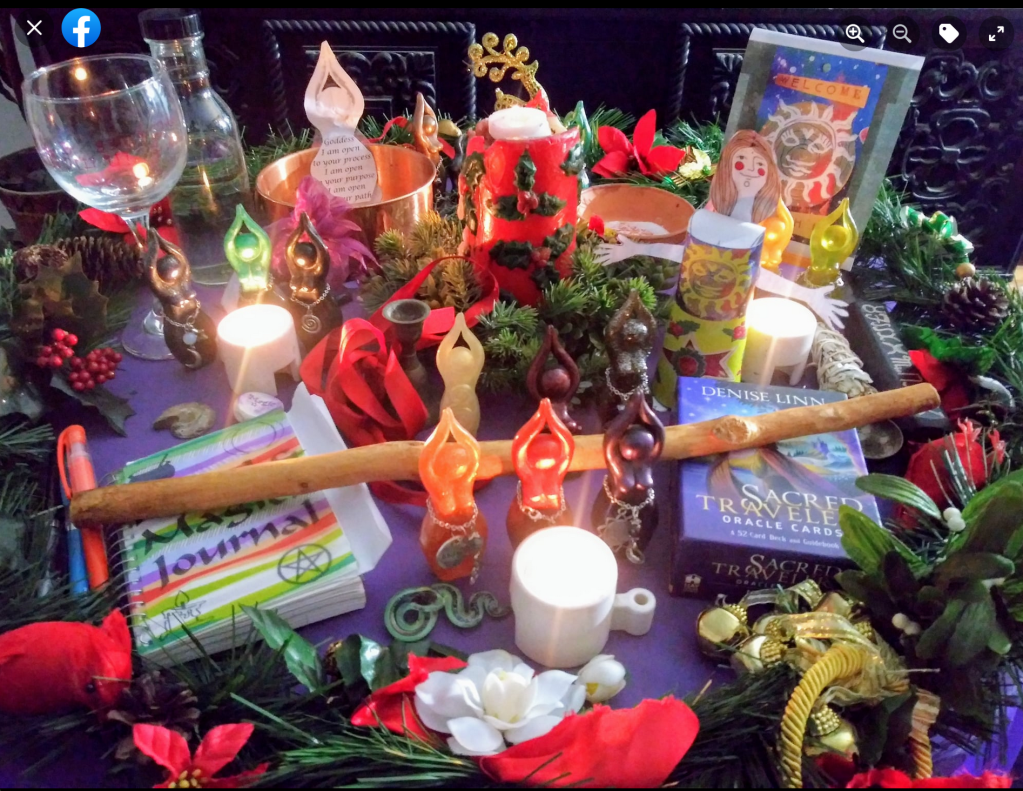
Alicia Bay Laurel: So thrilled to see the harvest goddess smiling in your winter solstice altar, dear Hecate Doe!
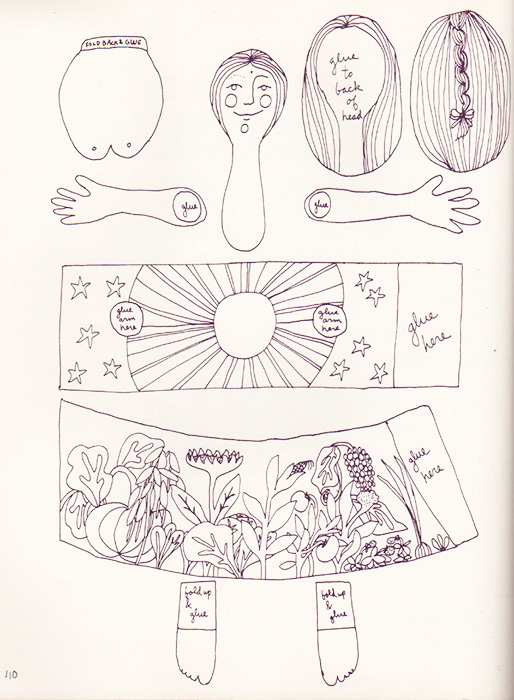
Hecate Doe: Alicia Bay Laurel, you already know I love me some toilet paper roll Goddesses! You should have seen my Mabon one dancing on my altar, and my Imbolc one was quite cheeky ! I’ve made various Yule ones for 50 years (ack) but this is the first year I’m diligently making one for each Sabbat. Although I design and change up the skirt and blouse on each one over the years, the original inspiration came from your beautiful book.
Alicia Bay Laurel: Wow, I am very honored that a page from Being of the Sun has become so deeply woven into your spiritual life, dear Hecate Doe!
Hecate Doe: Alicia Bay Laurel… and then some. Because it was before scanners, my books are all cut up, the pieces carefully guarded. My 50-year-old son was thrilled to hear that I’ve “met” you; he still remembers the words to [the song] “Receiver Believer” and can play Winter Solstice chant on the old recorder. For the last 50 years, we’ve always sung and played “Receiver Believer” every Yule!
____________________________________________________________
Here are the two pages from the new edition of Being of the Sun that give the locations of the existing recordings of the music in the book. All of these recordings are available from our online shop (there’s a link in the horizontal menu bar at the top of each page of this website).
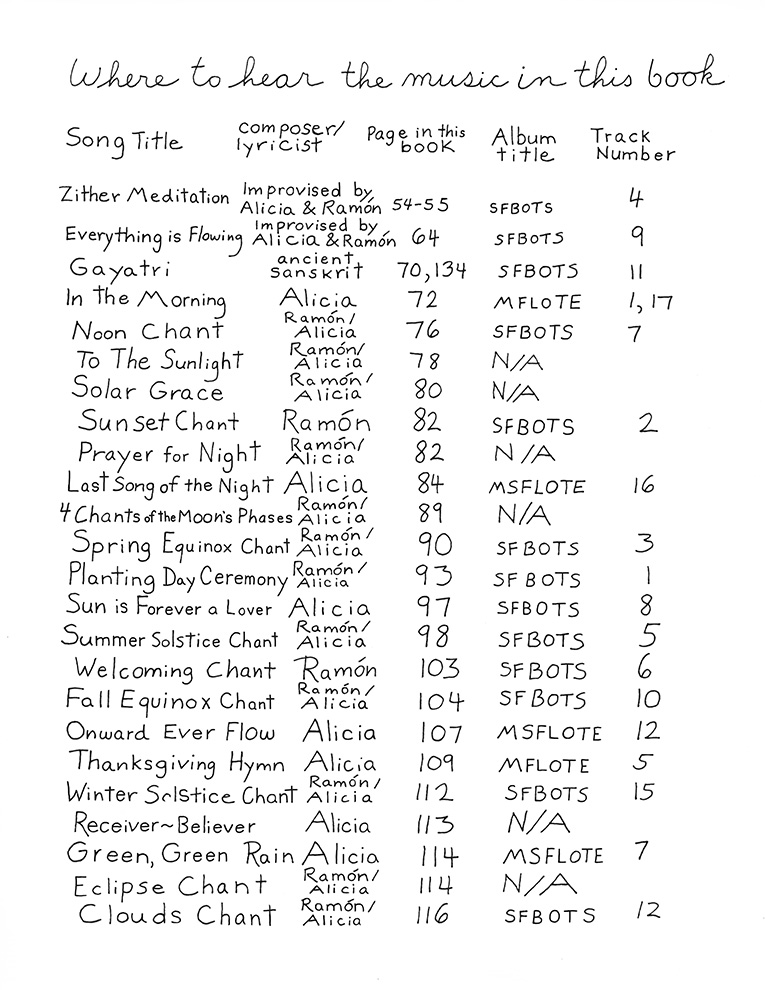
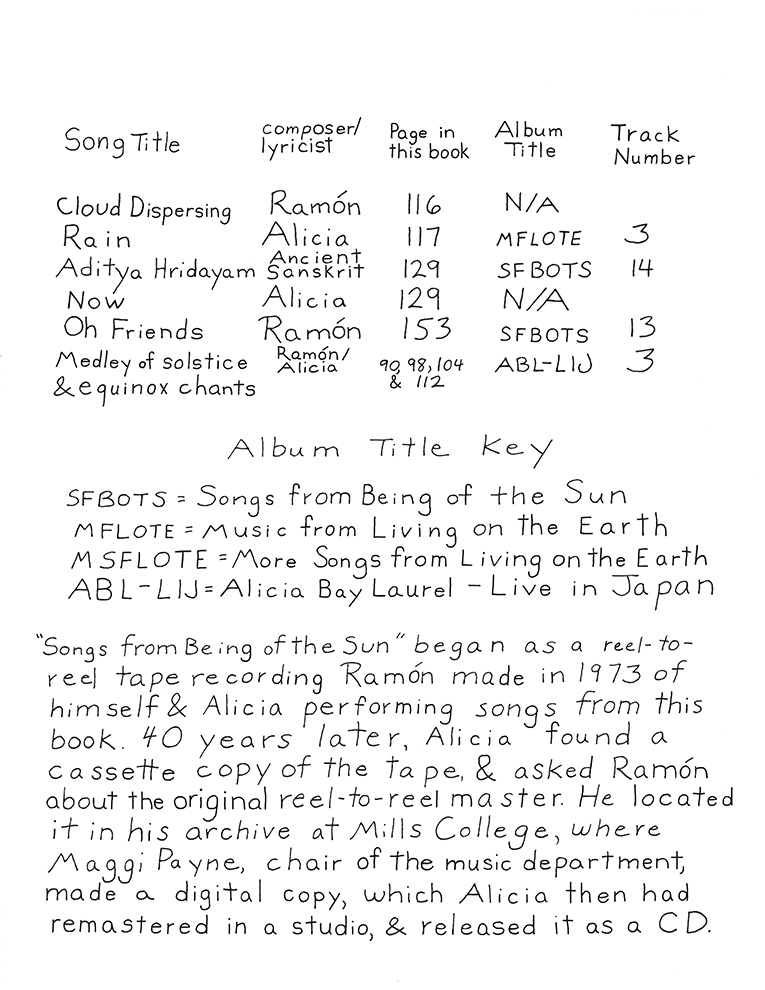
_____________________________________________________________
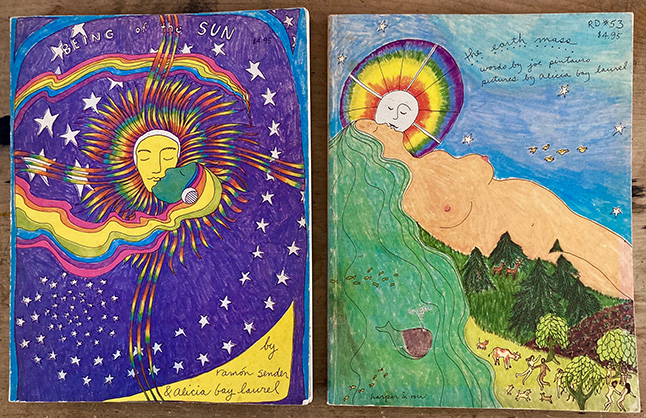
Dear Alicia,
Just thinking about you this morning as I was going through an old box of books I used for research on SPACED OUT and came across these two beauties…I’d completely forgotten about them!
Your work still inspires and brings joyto so many… (moi meme)
Much Love, Health and Beatitude for 2021
Alastair Gordon
Author, Architecture Critic, Visiting Professor at Harvard Graduate School of Design
New York, New York
Dear Alastair,
Thank you for this loving message, which brings me joy. And beatitude!
I have great respect for you and your work, and am thrilled to have had my work be part of it.
Last year, I finished the layout for the first new English language edition of Being of the Sun since 1973. I thought of you while I was restoring the color drawing that you used in your great book, Spaced Out.
Wishing you and Barbara every blessing,
Alicia
_______________________________________________
Being of the Sun was so amazingly influential for me. I saw a copy in the Lafayette CA library when I was 14 in the ’80s, checked it out and based a large part of my life on it. My approach to spirituality was influenced by your book.
Neil R. Rasmussen
Los Angeles, California
_________________________________________________
Beautiful Extraordinary Book!
Brigitte Mars
Herbalist, Professor, Author, Plant Expert, Natural Food Chef
https://brigittemars.com/
________________________________________________
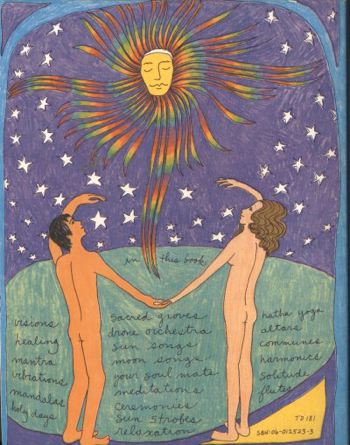
Intended to be a companion volume to Living on the Earth, this book goes deep into a communal way of life in 1973.
Alicia Bay Laurel and Ramon Sender share their vision of yoga, healing, sun songs, moon songs, meditation, ceremonies, communes, solitudes, and more in a how-to format connecting us back to our inner child, naked & free!
May the holy words found in this book heal the world at a time when we need them most!
Tracy Conti and Stephen McCarty
Solar Return Shop
Echo Park, Los Angeles, California
______________________________________________________________
Spirits of the Center, I come to you on this magickal HolyDay as I light this candle, reaching out, opening to, absorbing the blending of the joy, inspiration, and harmony of the East, the life force, passion, and healing transformation of the South, the intuitive wisdom, magick, and peace of the West, and the grounding, fertility, and nurturance of the North, as I release my suffering, my bonds, my regrets, and my fears to bring me into deep connection with the primal Truth and Divinity of my Higher Self in the year to come and always. Blessed Be, so mote it be.
_____________________________________________
I finished reading Being of the Sun, and I loved it.
It’s beautiful, and I can’t wait to see my dad read it to my [future] children one day.
It will be a lovely bed time book.
Bianca Scott
Herbalist and Writer
Tigard, Oregon
____________________________________________
_____________________________________________________
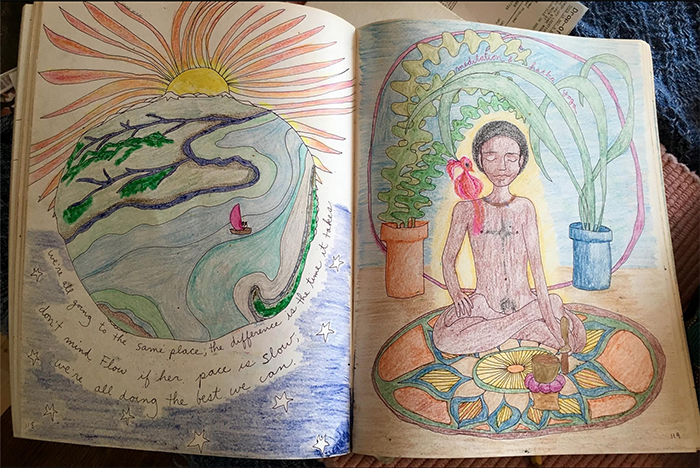
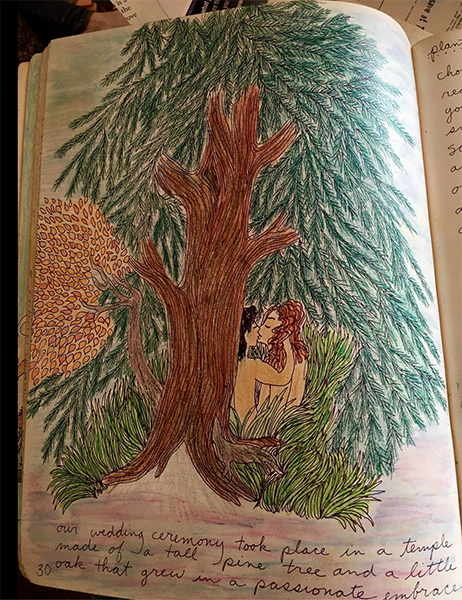
Meg Henschel colored some of the drawings in Being of the Sun.
She posted these on Facebook in 2016.
______________________________________________________
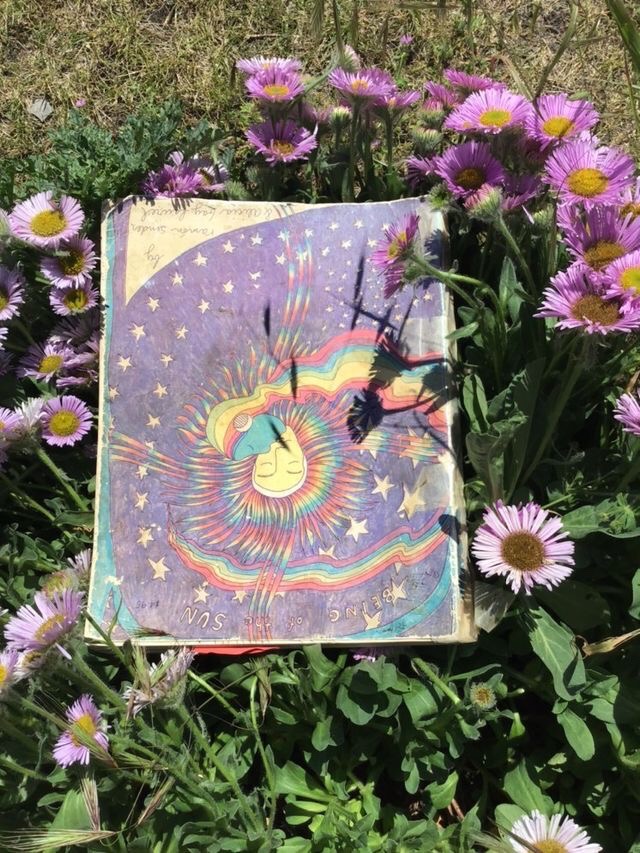
We don’t own or keep much in our lives, but this is one of the most treasured. This book came into our lives and gave us such joy. Wonderful images and genuine words of love and care for the planet and each other. Gratitude each day for the arrival of the Morning Star, bringer of life and joy to each and every living being on this planet.
Neil and Ness
Getting high on nature
___________________________________________________________
Dear Alicia,
My name is Alix, from Amsterdam. Currently I am on the island of Ibiza, in Spain.
Yesterday, I had the most perfect, aligned, beautiful ceremony with the mushroom. It told me to step in to the light, for I am a light being. It told me to always search for the Sun.
Then this morning I stumbled upon a vendor with retro books. The first one I was drawn to was your book Being of the Sun. I hope that you feel, as much as I do, how your time capsule found the right place at exactly the right time.
Thank you for your wisdom, for I will hand it over to my unborn children.
With love and sunshine, also to Ramón
Alix
____________________________________________________________
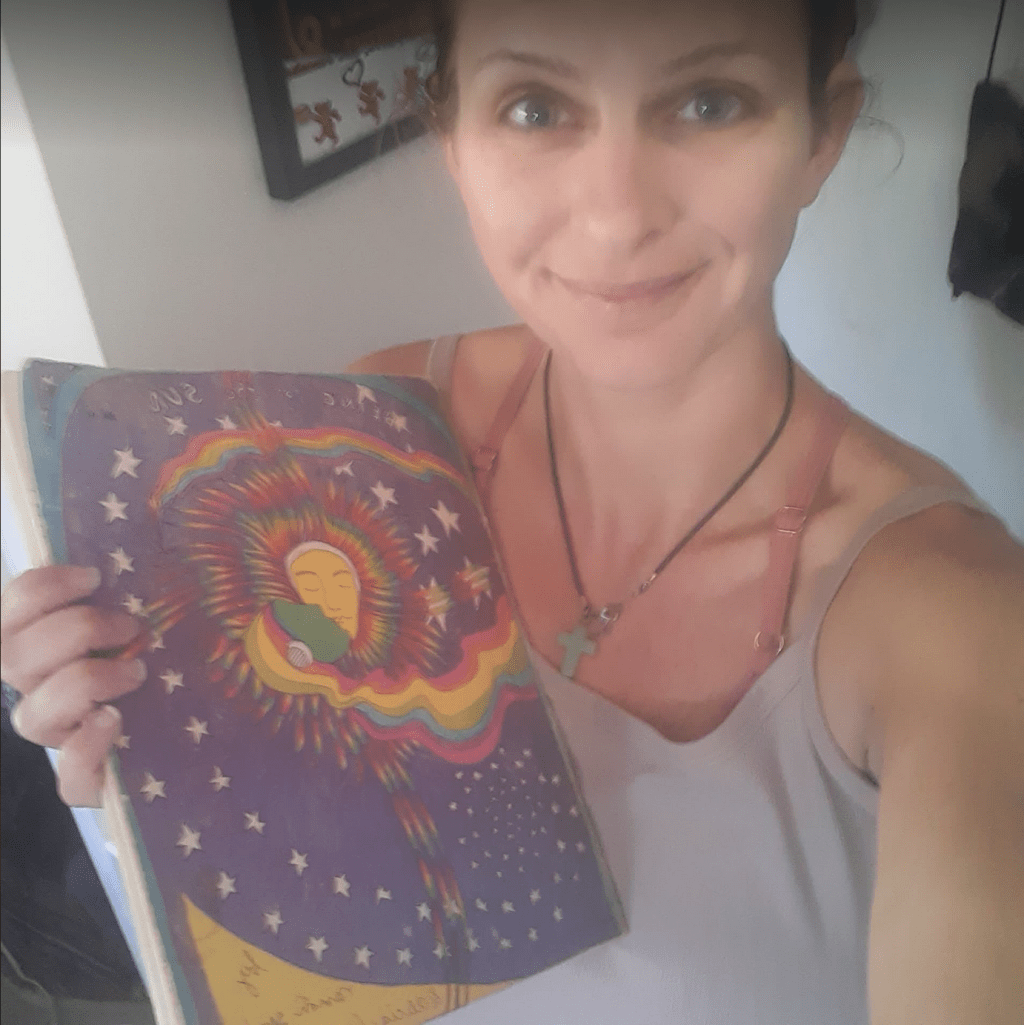
Being of the Sun found me at my local used book store the other day. It was the first book I noticed, and grabbed it . Being of the Sun speaks to my soul! I’m so grateful it found me. I want to thank you personally from my soul to yours.
It is almost everything I already believe in, and soo much more. I didn’t realize that it was the sequel to Living on the Earth, which I actually just went in search for and ordered along with the new edition of Being of the Sun, because I want to be able to color it, but didn’t want to ruin the original. I’m so happy that your book had found me, and grateful for being, and to get the chance to thank you for inspiring me and soo many others.
Its like you said in your book, the human race is awakening, and the universe listens to everything that we say feel or think. I’ve recently been awakening over the past few years, which has been a blessing, yet difficult at the same time, just because of the world we live in. I find soo much comfort in your books and I’m soo happy that you decided to write and publish them.
I hope that your books continue to find their way to more beautiful souls in search of their own spirituality, just like me 
Stephanie Rose Gracon
Avon Lake, Ohio
_________________________________________________________
How lovely it was to live largely outdoors in nature back then. It didn’t rain all summer (1973)while I built my [stained glass] dome to live in. The only bugs I encountered were yellow jackets. I wonder how many people have made stained glass panels on a table under the sun, naked but not too hot. That’s when your book “Being of the Sun” was so illuminating.
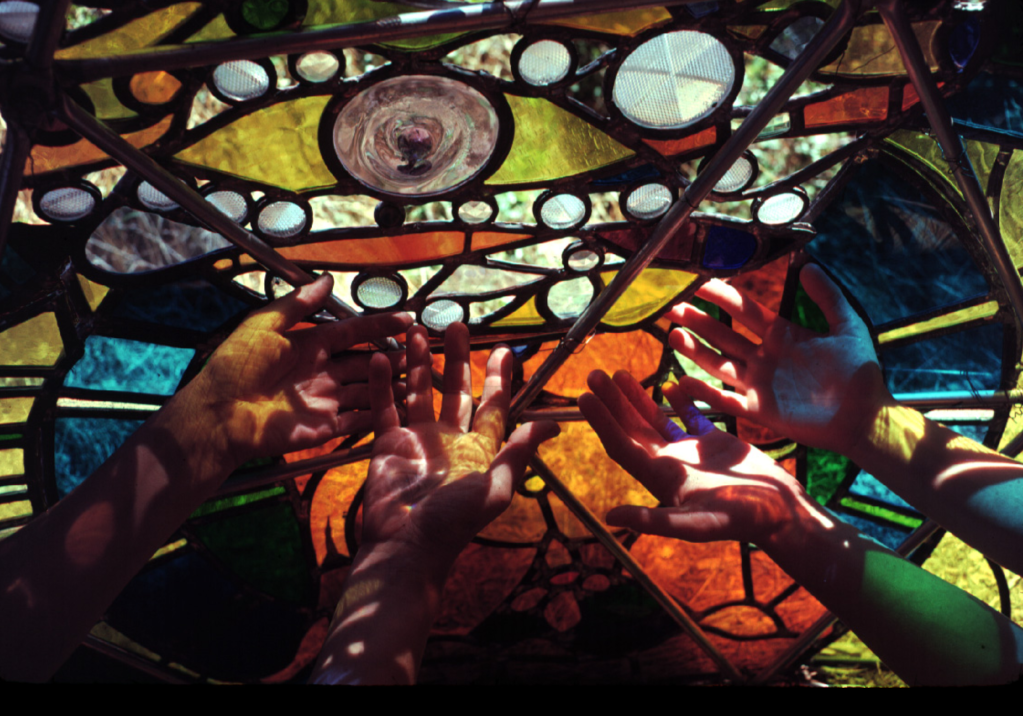
This is the “Breathing Cloud” It has lots of openings for air and there are prisms to breathe rainbow colored light.
Caroling Wholeo Geary
Artist and creator of the Wholeo Dome
_______________________________________________________________
I am loving experimenting “modes/scales” from Being of the Sun currently ( got Japanese one from second hand book store, very lucky!) Will get living on earth in Japanese soon too.
Thank you for your beautiful creation and being you.
Momo Hamada
Brisbane, Queensland, Australia
________________________________________________________________

Portia F, of Todmorden, Yorkshire, UK, sent me her copy of Being of the Sun with her wonderful colorations of many of my line drawings, along with a note:
“I have cherished the lightness of touch of Being of the Sun for many years. I live near this lovely landscape [the Yorkshire Dales] in the UK and was definitely a hippie in the ’70s/’80s. Many thanks for your continuing creativity and positivity!”
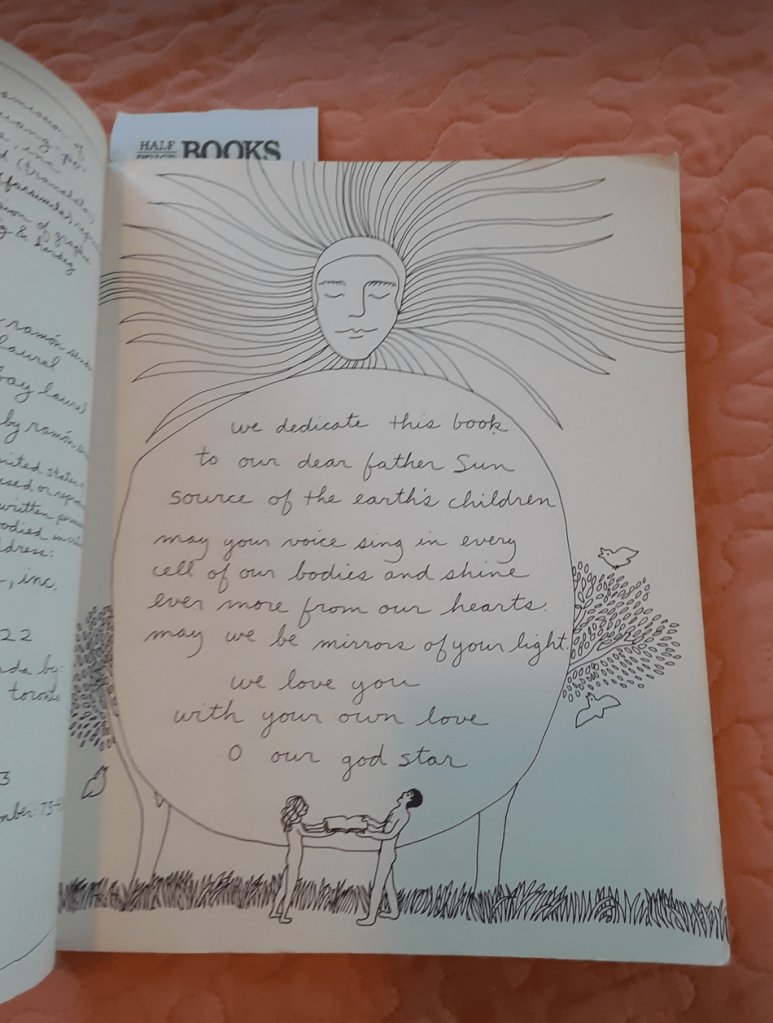
Above is Portia’s coloration of page one of Being of the Sun. The heat of the sun is palpable!
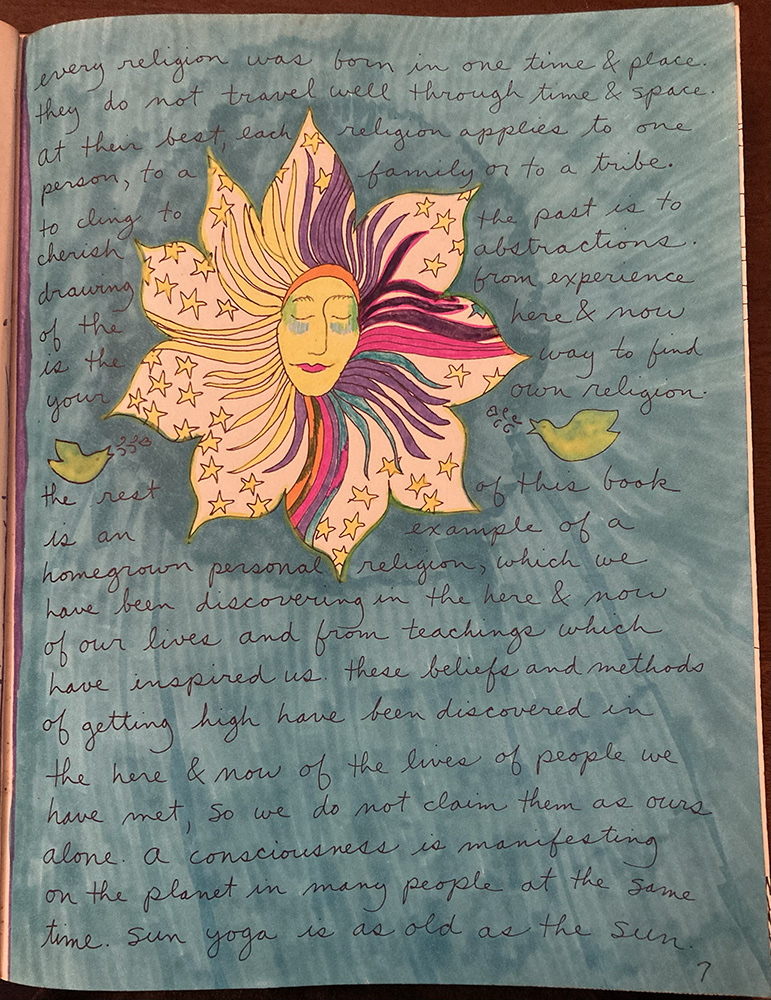
Portia’s color interpretation of page 7 gave me the feeling of a divinely enlightened mime.
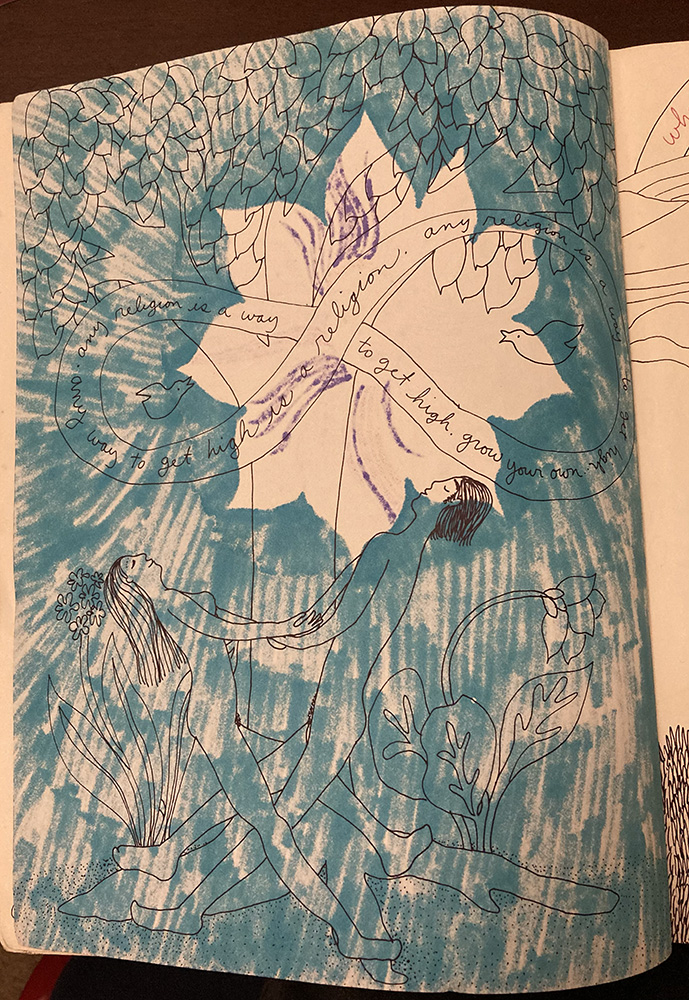
On the reverse of page 7, on page 8, is a miraculous serendipity of design from the ink coming through the paper from page 7. I feel the intense light and shadow of the rainforest in this one.
Thank you for sending these, dear Portia!
_________________________________________________________
Happy Solstice! I’m delighted to share this short and sweet offering by a true master, Alicia Bay Laurel. Her first book, Living on the Earth has been inspiring me for nearly five decades. Imagine my surprise when I found her companion book, Being of the Sun just last year. Please support this amazing artist and wisdom keeper!
E Georges Grinnell
Human Being at Here & Now
_________________________________________________________
A Facebook post from February 29, 2016 about Being of the Sun:

I received today a request from a postgraduate literature student at a university in London who is writing a thesis on spirituality in books from the 1960s to the present, and wondered if I would send her a summation of Ramon Sender‘s and my spiritual book, Being of the Sun, which was published by Harper & Row in 1973, and which is still published by Soshisha, Ltd. in Tokyo. I told her I was honored by her request, and scanned the opening chapter, which sums up the book and its intentions. In case any of you would like to read it, or just look at the pictures, I am posting those pages here.
Note from 2024:
Eight years ago I did not know I would be publishing a new edition in English of Being of the Sun in 2021. The pandemic offered an opportunity to step back from concert, art and book touring, and create new editions of both Living on the Earth and Being of the Sun.
I was thrilled to do the page layouts digitally – for the first time – with digital designer Karen Tsugawa coaching me over Zoom. Unlike the editions published in the 1970s, the colors of these illustrations are true to those of the drawings I made in 1972, because I made the scans myself and had hands-on control of the layout.
The result of this collaboration is available here.
____________________________________________________
Oh, how I love my new copy of Being Of The Sun!
The inscription meant so much to me! Thank you! 
If I would have known in my 20 year old self that one day we would be friends, I would not have believed it!
Peace and Joy to you always
 with deep love,
Mammamoon
Elizabeth Lunt
Little Farm School
Limerick, Maine
___________________________________________________
Being of the Sun is Alicia Bay Laurel’s second book for the ages. Following on the acclaim for her consummate natural lifestyle guide, Living on the Earth, and partnering with the renowned avant garde composer and yogi Ramón Sender, Being of the Sun explores the ways in which a person can strip away the trappings of Western culture and “be here now” in a more natural and spiritual manner through daily practice, meditation, song, dance, and celebration of community.
The guidance and inspiration is presented in muted color with Alicia Bay Laurel’s flowing line drawings and script, along with 8 pages of original full-color illustrations. The information ranges from the quirky (such as how to make bagpipes) to the practical (how to make a sauna and tell time from the position of the sun) to the spiritual (with tips on breathing, mantras, and positions) to maintaining a supportive community.
Throughout this compendium are scores and songs written by Ramón Sender, with explanations of suitable instruments and occasions. The influence of the seasons of the year and astrological signs is also noted. This unique work is an invaluable resource to read cover-to-cover and fascinating to open to any page.
Amazon’s review of the 2021 English language edition of Being of the Sun
________________________________________________________

This is my coloring from one of Alicia Bay Laurel’s beautiful books, Being of the Sun.
It’s not a coloring book. It’s about living life, but many illustrations give the opportunity to color.
I had so much fun doing it, too. I colored much of the book.
It was during my long convalesence from a crushed ankle. It was a godsend.
Sheri Bender
Yucaipa, California
“Playing music keeps the passion flowing, which keeps life flowing. I believe in love. I am a Gypsy Indian. I will always be a free spirit, till the day I die.”
This drawing depicts a Sunday potluck and music jam at Wheelers Ranch commune, circa 1970.
I love the way you colored it, dear Sheri!!
Alicia Bay Laurel
_________________________________________________
Alicia, I would love for you to inscribe the book, Being of the Sun.
It is for my dearest friend, Talulah, on her 24th birthday.
I’m a big fan of your books!
Thank you,
Nina Tavan
Melbourne, Australia
___________________________________________________
Your book has given me so much wisdom and joy in life!!!
I love your book soooo much!
Thank you for writing such a great book
Maya Ikeda
Nara, Japan

_______________________________________________________
Being of the Sun is clearly a book with a long standing legacy, touching lives and holding its own place in literary and spiritual history. The quality of the printing, design, and illustration speaks to the care and commitment you’ve invested, and it’s easy to see why it has become a beloved classic.
I want to express my genuine admiration for your artistry and the way you’ve continued to share it with the world over the decades.
Sandra K. May
Community Manager, Winning Waves
Bookniche Reedsy
Canisteo, New York
_________________________________________________________
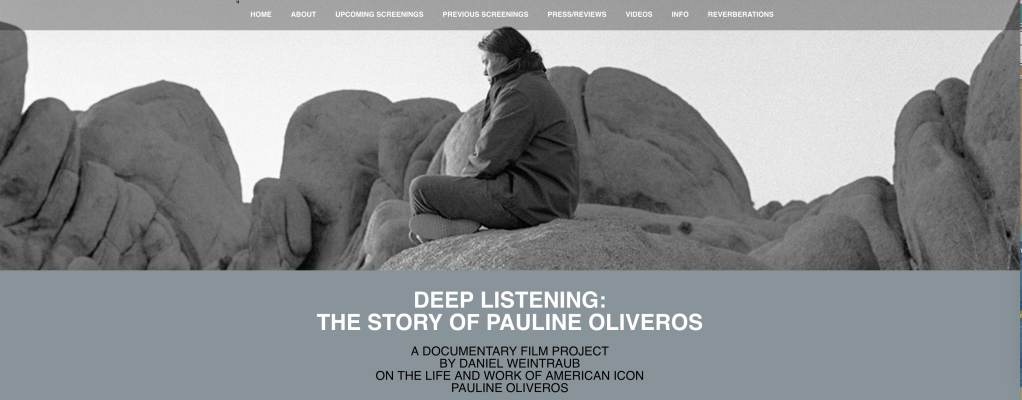
Art and culture historian Karyl Newman sent me this link to the movie, Deep Listening: The Story of Pauline Oliveros, made about Pauline Oliveros, one of the original members of the San Francisco Tape Music Center, along with Ramón Sender Barayón, Terry Riley and Mort Subotnick, all of whom appear in the film.
You can watch the film here: https://thestoryofpaulineoliveros.com/
__________________________________________________________


 Alicia Bay Laurel
You must be logged in to post a comment.