Molly Ivins, Farewell

By John Nichols
The Nation

Wednesday 31 January 2007

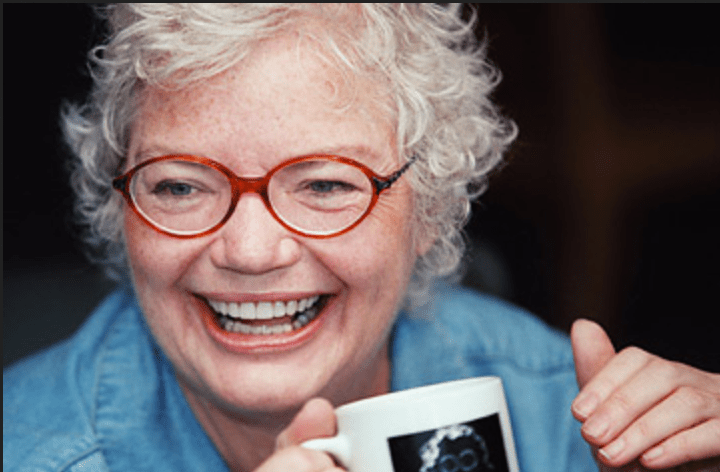
Molly Ivins always said she wanted to write a book about the lonely experience of East Texas civil rights campaigners to be titled No One Famous Ever Came. While the television screens and newspapers told the stories of the marches, the legal battles and the victories of campaigns against segregation in Alabama and Mississippi, Ivins recalled, the foes of Jim Crow laws in the region where she came of age in the 1950s and ‘60s often labored in obscurity without any hope that they would be joined on the picket lines by Nobel Peace Prize winners, folk singers, Hollywood stars or senators.

And Ivins loved those righteous strugglers all the more for their willingness to carry on.

The warmest-hearted populist ever to pick up a pen with the purpose of calling the rabble to the battlements, Ivins understood that change came only when some citizen in some off-the-map town passed a petition, called a Congressman or cast an angry vote to throw the bums out. The nation’s mostly widely syndicated progressive columnist, who died January 31 at age 62 after a long battle with what she referred to as a “scorching case of cancer,” adored the activists she celebrated from the time in the late 1960s when she created her own “Movements for Social Change” beat at the old Minneapolis Tribune and started making heroes of “militant blacks, angry Indians, radical students, uppity women and a motley assortment of other misfits and troublemakers.”

“Troublemaker” might be a term of derision in the lexicon of some journalists – particularly the on-bended-knee White House press pack that Ivins studiously refused to run with – but to Molly it was a term of endearment. If anyone anywhere was picking a fight with the powerful, she was writing them up with the same passionate language she employed when her friend the great Texas liberal Billie Carr passed on in 2002. Ivins recalled Carr “was there for the workers and the unions, she was there for the African-Americans, she was there for the Hispanics, she was there for the women, she was there for the gays. And this wasn’t all high-minded, oh, we-should-all-be-kinder-to-one-another. This was tough, down, gritty, political trench warfare; money against people. She bullied her way to the table of power, and then she used that place to get everybody else there, too. If you ain’t ready to sweat, and you ain’t smart enough to deal, you can’t play in her league.”

My Concert at the Paisley Violin


On Saturday, January 27th, 2007. I played two hours of my music at the Paisley Violin, a supremely hip small eatery on Grand Avenue in the downtown arts district of Phoenix, functioning as a second living room for the boho denizens of the neighborhood. Musician Chris Warmuth, who lent me a PA system which he gallantly carried from house to car to club to car to house for me, ran into half a dozen friends while we were there. My new friend Sarah Curtis came to this show, too, to sell stuff from my table while I was playing.


This being a CD release party for my most recent recording, I played and sang ten jazz, blues and gospel songs and two jazz standards from What Living’s All About, accompanied by a version of the final mix from the CD that excluded my recorded vocal and guitar parts.

Well, all but one song. Nature Boy was recorded rubato (outside of a time signature), improvised in the studio by me, upright bassist John B. Williams, and percussionist Enzo Tedesco, all of us playing at the same time. In order to perform the song with the recording minus my voice, I would have had to memorize the entire improvisation and duplicate exactly what I sang on the recording. That kind of misses the whole point of doing an improvisation, which is to spontaneously create music together that has never existed before. So, Nature Boy was relegated to being played (as a finished recording) during one of my breaks.


I played on an elevated stage surrounded by wonderful nature photographs by Greg Lansing, whose show lasted the month of January. After my second set, Chris, Sarah and I had a delicious meal at the bar.


I brought a full panoply of my wares, and Gina, the manager at the Paisley Violin, offered to keep the table set up and sell the goods on it during the week to help publicize my second show at the Paisley, next Friday, February 2nd, from 7 to 8 PM on the evening of the First Friday monthly open gallery art walk.

Concert at Fiddler’s Dream


Friday night, January 26, 2007, I played an all-acoustic set at Fiddler’s Dream, a small night club at the back of the parking lot of the Friend’s Church of Phoenix, on Glendale Avenue and 17th Street in north Phoenix.

Staffed by volunteers and strict in its rules against electronic or amplified instruments, Fiddler’s Dream demands that its patrons maintain perfect silence during the performances, something rarely seen in the United States outside of classical music venues. In Europe, it’s not unusual at all. Audiences for all kinds of music actually stop talking and listen to live music.


The first of the two acts was Hans York, a German singer/songwriter/guitarist living in Seattle who had booked himself on a three month solo tour of various churches, house concerts, and other small venues, not unlike what I did in 2000 for eight months. I was enthralled with his guitar playing and his singing, and appreciated the gentleness and nature images in his lyrics.

What I noticed after I uploaded this photo to my computer is that Fiddler’s Dream actually does have sound reinforcement! See the two microphones on the ceiling on either side of the stage lights?


Hans and I each set out displays of our wares below the Fiddler’s Dream t-shirt rack.


Having an attentive audience turned on the comedienne in me. I just let her rip. Sarah Curtis, a lovely young friend of Tracy Dove’s, took the photos of me.


I performed songs from all three of my CDs, and I had fun accompanying myself on guitar the songs from What Living’s All About that I had recorded with a band, and no guitar, so that people could hear how they sounded when I wrote them.

Making a Healing Altar


I created an altar recently expressly to convey comfort and courage to a friend valiently doing battle with stage 4 cancer. She’s a Wiccan priestess, and her friends, family and followers are united in prayer to give her strength. If anyone can beat this, she is the one.

I chose the goddess image in consonance with her faith, rising on butterfly wings that symbolize transformation. The three minerals are jade, for good fortune, rainbow obsidian, for the strength of firey elemental energies, and blue lace agate for serenity. The furnishings of the temple reflect the furnishings of her temple-like home.

The materials for the shrine came from last year’s greeting cards, a 2006 calendar, a scrap from Benida Solow’s lace and trim box, and a collection of small treasures and minerals that Tracy Dove gave me a couple of years ago. Tools: small sharp scissors and Aleene’s Tacky Glue (Benida’s hint: you can make extra-viscous glue at home by placing ordinary white glue in the freezer until it reaches the degree of thickness you prefer).


The small, lightweight box is made entirely of handmade paper made with flowers mixed into the pulp. The belt is printed with a Tibetan (or Celtic) knot symbolizing the eternal mystery. I received the box at Christmas time, containing a gift from Tibet Moon shop in Fairfax, California. Since the altar is light and small, my friend is able to take the altar with her when she attends medical appointments.


I signed it on the inside cover in gold ink, and added a postcard with the dancing goddess from the cover of my book Living on the Earth.

Physicist confirms what we wrote in Being of the Sun in 1972

“Saintly Throng in the Form of a Rose” by Gustav Dore

Ramon Sender, co-author of Being of the Sun and dedicated enlightenment wonk, just sent me links to a favorite sun worship website and to a website regarding the work of Nassim Haramein, a physicist from Switzerland. The writing below is by Wayne Purdin.

The word “sol” has many meanings, and they’re all interconnected. It can mean our sun. Add a “u” for “you” and it’s your soul or your inner sol or sun. Add an “o” for “one” and you get solo, which means alone or “all one.” “We are one in the sun” isn’t just a fanciful New-Age expression; it is the key to the New Age. Thru unity all problems are dis-sol-ved creating a sol-ution. In astrophysics, sol means singularity. Nassim Haramein is probably the most brilliant physicist since Einstein. He has found that every living thing from a microbe to a sun has a singularity or black hole that not only takes in light but transmits equal amounts of light to its sphere of influence. One aspect of light is information, so singularities take in and transmit information. Our sun has a singularity in its core. As all singularities are “connected” our Sun receives information from the Central Sun of our galaxy, which the Mayans called “Hunab Ku.” The Hunab Ku recieves its information from the Great Central Sun of the universe. Our sun then transmits this information or wisdom to the solar system. We can absorb this information through our eyes, including the third eye, or pineal/pituitary gland complex, when we sungaze. Sungazing pioneer, Gene Savoy, calls this aspect of sunlight the “information or intelligence factor” or “IF.” He writes in Project X: the Search for the Secrets of Immortality, “This energy [from the sun and beyond] has inherent IF potential. It is cosmic information coming into our mind and consciousness directly from the source – the cosmos where it all began… The first cause in the creation of the world was the ‘word,’ or the logos, which emerged from the mouth of God. The philosophers have always taught that this ‘word’ is the true nutrient of the spiritual part of man.”

Page 2, of Being of the Sun: “Vision Quest”

Art Opening in Silverlake


Last Saturday January 13, artists Hoshi Hana, Andy Robinson and I attended an art opening at a storefront gallery at Sunset Junction in the boho Silverlake district of Los Angeles. The gallery didn’t have a name, but it was next door and connected to a boutique named Pull My Daisy after a poem written in the late 1940s by Allen Ginsberg, Jack Kerouac and Neal Cassady, from which a 1959 film was made. Hoshi Hana took all of these pictures, as my digital camera is on the fritz. Thank you, my dear!


S. Lee Robinson has hung many a show in her 22 year career as a painter, and this retrospective contains one or two paintings from each of her shows.


Meet S. Lee Robinson, as wonderfully warm as she is talented. Hoshi Hana and Andy know her from Gallery at the End of the World, a cooperative gallery of which they are all members.


Hoshi Hana and Andy at the opening.


Me, drinking a Pellegrino and cranberry juice and admiring “Big Boat.”


The DJ played danceable retro music, Bo Diddley, Michael Jackson, the Bee Gees. Only Hoshi Hana and I danced. I’m a baby boomer and can’t help it. Hoshi Hana’s just loose for a Gen X.


A merry throng, admiring the art, nibbling on olives and tomato pesto on baguette slices, sipping wine and soft drinks, laughing and chatting under the icicle lights.


Hoshi Hana’s friend since high school, Sheri Ozeki (in the hat), and a friend of Sheri’s.


The big yellow face got sold in the first hour of the opening! The bull was from an entire show of nothing but bulls, just as the big boat was from a show of all boats.


“Three Kings – Mars,” Andy’s favorite of the paintings in the show.


A drawing titled “Woman.”


The gallery opens into the Pull My Daisy store, offering a tantalizing view of its cloth monster. The shop is famous for its dachshund, Bingo, who cruises Sunset Junction begging for bacon. The photos on the dressing room door are of people in exotic locations around the world wearing Bingo the Dachshund t-shirts.

Alice Coltrane 1937-2007

Alice Coltrane, a jazz performer and composer and wife of the late saxophone legend John Coltrane, has died. She was 69. Coltrane died Friday [January 12 2007] of respiratory failure at West Hills Hospital and Medical Center near Los Angeles, said her sister, Marilyn McLeod.

For nearly 40 years, Coltrane managed the archive and estate of her husband, a pivotal figure in the history of jazz. He died of liver disease in 1967 at age 40.

A pianist and organist, Alice Coltrane was noted for her astral compositions and for bringing the harp onto the jazz bandstand. Born Alice McLeod in Detroit on Aug. 27, 1937, she began learning classical piano at age 7. She studied jazz piano briefly in Paris before moving to New York, where she met her future husband in 1963.

At that time, she was playing with bandleader Terry Gibbs, who has often taken credit for introducing the two. John Coltrane “saw something in her that was beautiful,” Gibbs told the Los Angeles Times.

She left Gibbs’ band to marry Coltrane and began performing with his band in the mid-1960s. “John not only taught me how to explore but to play thoroughly and completely,” Alice Coltrane said in comments published in “The Black Giants.”

Please enjoy this vintage 16 mm film of Alice Coltrane.

Mid Day at the Oasis


At the northeastern tip of Joshua Tree National Park, four miles west of 29 Palms town, lies a real desert oasis and a well marked trail to it from a parking lot at the end of Canyon Road, which joins Highway 62 within 29 Palms. I hiked there with a friend on New Years Eve day. In this photo I’m at the top of a ridge overlooking the town. It’s mostly down hill from there to the oasis.


A distant view of the tops of the fan palms of 49 Palms Oasis, one of five fan palm oases in Joshua Tree National Park, and one of 158 in North America.


We are getting closer to the oasis! How mysterious to see a grove of green trees in the midst of miles of bare rock.


One of the pools of the oasis. There is evidence of a forest fire on the tree trunks. The desert fan palm, Washingtonia filifera, is a southern California native, and rarely killed by fires, as it contains vascular bundles that carry water and nutrients from its abundant, pencil thin rootlets that reach into the crevices and suck up the water of the oasis. This makes the palms quite top heavy, up to three tons, and therefore vulnerable to destruction by flash floods.


Another pool of the oasis. What an amazing environment, I thought. People must have been coming here since prehistoric times. Well, yeah. Native Americans, particularly the Cahuillas, ate the fruit of the fan palm, used the fronds to build waterproof dwellings, and planted the seeds in locations likely to support palms. While coyote, quail and bighorn sheep visit oases, some animals live nowhere else – the western yellow bat, the hooded oriole, and the giant palm-boring beetle, which only kills the old trees, keeping the palm population youthful and healthy.


A natural abstract painting by lichens on the granite boulders along the trail.


After an hour of uphill walking, we see the view of 29 Palms town again.

Joshua Tree National Park


Joshua trees against a sunset sky in Joshua Tree National Park, in the high desert of the Little San Bernardino Mountains just east of the Coachella Valley (where Palm Springs is) in Southern California. Joshua trees (yucca brevifolia) are giant members of the lily family. Legend has it that westward traveling Mormons named the Joshua tree for its arms upraised in supplication to the Divine, like a biblical hero.


Map of the hiking trails in the northeastern quadrant of the park, where the amazing rock formations are.


A typical rock formation in Joshua Tree National Park, with a gibbous moon above, near Barker Dam, where I hiked one afternoon in late December.


Three drawings offered by the park service at Joshua Tree National Park, with a geologist’s explanation of how the rock piles occurred. To quote: “The present landscape is essentially a collection of relic features inherited from earlier times of higher rainfall and lower temperatures.” 100 million years ago, when the crust of the earth oozed upward and cooled, the underlying granite layer developed vertical, horizonal and diagonal fault lines, which were weakened and exaggerated by water percolating downward through them. Gradually the moisture turned some of the granite around the fault lines to clay, which was gradually washed away by flash floods, exposing piles of huge eroded boulders.


Even though Joshua Tree National Park is extremely arid, below lies a water table from which springs and oases emerge. Barker Dam trapped the water of one such spring, creating reflecting pools among the rock formations.


Where water lies, grasses grow, rabbits graze, and mice come to eat the seeds. Bugs spawn, birds come to eat the bugs, reptiles come to eat both, and carnivorous mammals come to eat the mice, rabbits, reptiles and birds. A cascade of biodiversity springs from even a small amount of water in a wild environment.


Dusk at Joshua Tree National Park. I stood listening to the deep quiet here.

Art Queen


On December 30, I had dinner with Shari Elf and Randy Palumbo in Joshua Tree, California, and afterwards visited their newly opened gallery, Art Queen.


Randy and Shari humored my request for a posed photo in one of the two gallery spaces they’ve created, next to one of Shari’s wryly witty folk-art-from-found-objects pieces.


Today they hung a show in one of the two gallery spaces by the late Raymond Thunder Sky.


Here’s the postcard they created to announce the show…


…with a photo of the artist in his clown collar and hard hat on the front.


A closeup of Raymond Thunder Sky’s costumes…


…and a closeup of one of his drawings.


On permanent display, in an old foto-mat building they hauled in from the desert and refurbished, is the Crochet Museum…


…housing Shari’s vast collection of crocheted animals and dolls. She doesn’t crochet herself; she just loves the “grandmother energy” of these creations. She finds them at thrift stores and garage sales, although, once her huge fan base realized she was collecting, crocheted gifts have poured in from everywhere.


Next to the Crochet Museum, an installation of garden sculptures by a desert folk artist who calls himself Moby Dick, who moved away to Phoenix. Shari and Randy had heard that his home was being sold, and they were concerned that the folk art environment Moby had created would get destroyed or thrown out by whoever bought the property, if they didn’t like it, so they went out, bought the whole collection, and set it up at Art Queen.


They’ve also set up a biodiesel filling station in back of the gallery (they both drive bio-diesel powered vehicles), and they have a band called Fairy Elf that performs locally. Here is one of Randy’s art pieces, titled “Condom Blossoms.” Randy owns 3D Laboratory, a construction company in New York City, plus a natural foods restaurant called Dodo Cafe in the South Street Seaport neighborhood of downtown New York City, and his art work has been shown in galleries and exhibitions around the country.


Shari enjoys an enormous following for her work, which she built up originally by selling her pieces at swap meets around Los Angeles, but which continues to grow as an online community forms around her wonderful website. When she posts her finished pieces on her site, there is a rapid scramble among the faithful and all are sold in a matter of hours.

Above is the sign she used at her table at the Santa Monica Airport Swapmeet back in the 1990’s, when she was escaping her former career as a seamstress.


This piece, photographed and printed on a postcard, announced Shari’s gallery show, “95% Trash,” in Kansas City at the Light Box Gallery a few years back.


Here are some of Shari’s pieces hanging in her studio, a separate small building at the Art Queen complex. Randy commented that he’d seen many art studios around New York City, but none as fun as Shari’s.


The All Star Seamstress Dogs (framed in spools of thread) commemorate Shari’s All Star Seamstress Band, in which she sings, plays guitar and omnichord, and is accompanied by percussionists playing sewing machines, scissors and pin boxes. You can hear her amazing songs on her CD (or download) I’m Forcing Goodness Upon You.


Says Shari about her choice of media: “It was, at first, for economy, but mostly because trash is more interesting. Searching for the stuff is like a treasure hunt.”