No War

The looming third anniversary of the US invasion of Iraq prompts me to think again about how this massive tragedy occured.

Howard Zinn says all wars of aggression are sold to the public with lies:

http://www.truthout.org/docs_2006/031406D.shtml

Noam Chomsky says the “Bush Doctrine” is nothing new, just worse:

http://www.chomsky.info/interviews/20040519.htm

If you want to march in protest, here’s where to find actions and events:

http://www.internationalanswer.org/

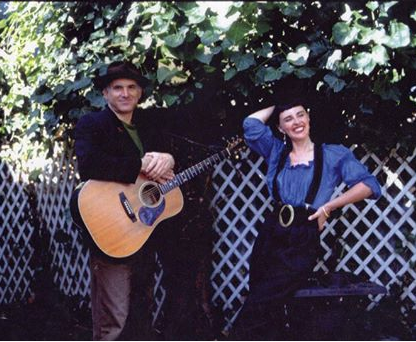
January 20, 2003, Hilo, Hawaii.
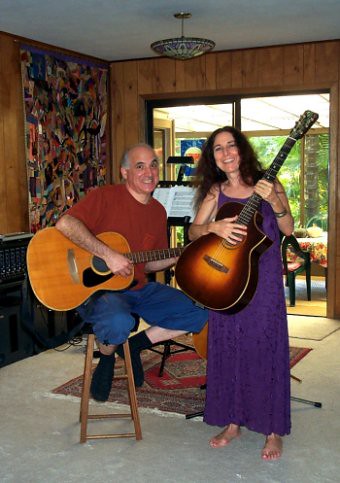
Joe Gallivan and I protested the US invasion of Iraq before it happened.

Sauteed Beet Greens

Beet greens disintegrate more quickly that other greens in the refrigerator, so time is of the essence for making them into a tasty dish. The beet roots themselves (minus the stems and leaves) can last for months in a cold dry storage, and at least a couple of weeks in a refrigerator.

Cut the stems from the tops of four to six beet roots, and carefully rinse the leaves and stems in cold running pure water, discarding any portions that are broken, bruised, yellowed or limp. Cut the clean, healthy leaves and stems into sections one inch long. Peel and cut one large yellow onion into pieces less than an inch wide or long. Peel and finely chop one large or two small cloves of garlic.

In a large saucepan or wok, heat 2 tablespoons of sesame oil until it sizzles if a tiny drop of water is dropped into the pan. Add the garlic and stir until golden brown. Add the onion and stir until translucent and soft. Add one quarter of the beet leaves and stems and stir until they have wilted. Add another quarter of the beet leaves and steam and stir until they, too, have wilted. Continue with the two remaining quarters of the beets tops. Stir over a medium flame for another five minutes, then remove the sauteed vegetables into a bowl. Spray on and stir in a little Bragg’s Liquid Aminos. I like to top this dish with babaganoush (roasted eggplant and sesame tahini dip), but it’s equally wonderful atop a nest of brown rice.

John Huggins' Photography

I took my mother, Verna Lebow Norman, to our cousin John Huggins’ photography show opening at Bergamot Station Arts Center yesterday. Mom sculpts ferociously figurative pieces, mostly in clay, but she has welded, carved wood, made wax pieces that were cast in bronze, painted in oils, tempera and watercolor, drawn with charcoals, pastel, pens and pencils, taken perfectly lit photographs of her work, and tends to create assemblages surrounding her pieces—her favorite trick is to add eyeglasses or hats to her glazed busts of people. Of course she wants to go to the art opening.


Photographer John Huggins and his son Noah

John Huggins’s show is called “Once.” He is showing photos of children, animals, and nature scenes, all blurry, the way they look when tears well up. Tears of joy, or of grief, as these beloved people, places and things are about to disappear? I didn’t ask.


A wall at the show

At the art opening, Mom ran into a friend and fellow artist, Harriet Zeitlin, who had preceded her as president of Artists for Economic Action back in the 1970’s.


Harriet Zeitlin and my mom, Verna Lebow Norman

John’s wife Erica Huggins, a big time movie producer (last year she produced the Jodie Foster film Flight Plan), arrived with their two young sons, Sam and Jonah. We are all delighted to see one another again, especially on this celebratory occasion.


John and Erica’s sons Sam and Jonah, and beautiful Erica, greeting my mom

Being a Public Citizen

I just read the history of Public Citizen, the largest of the many public interest organizations Ralph Nader started, written in celebration of 35 years since its inception in 1971. Click here, then click on “35th anniversary of Public Citizen”, which will open their latest issue of their magazine as a PDF file, and read pages 4 through 8. I don’t know about you, but for me, it was an eyeopener. These people have been speaking truth to power not so much with a vengeance, but with legal finesse, for decades. Many of the consumer safety laws we have taken for granted (and are seeing undone by the current administration) were hard won by the efforts by Public Citizen attorneys.

Who else has been out there organizing legal actions and speaking to elected officials to stand firm against corporate and government abuse of people and the environment for that long?

Well, certainly Common Cause (founded in 1970 by John Gardner). And the American Civil Liberties Union, founded by Roger Baldwin, Crystal Eastman, Albert DeSilver and others in 1920. Amnesty International was launched in 1961 by an article written by British lawyer Peter Benenson about two Portuguese men imprisoned for raising their glasses in a toast to freedom.

While maintaining our awareness of today’s political scene through news websites including truthout.org and commondreams.org, we need to support those who are out on the barricades, fighting legal battles and promoting better laws in Washington. This is just part of housekeeping.

Eluding the Common Cold

For a week now I’ve been living in a house with someone who has a cold and I haven’t caught it yet. I’m grateful that I have a few herbal cures in my remedy bag that seem to be keeping the bugs at bay.

Even fairly square types are starting to admit that antibiotics are inappropriate medicine for cold and flu. Antibiotics don’t kill viruses.

Lots of people know about Airborne. It’s an effervescent tablet dissolved in water to make a sweet, fizzy, citrus flavored drink “invented by a teacher who was sick of catching colds at school.” It’s been easier to find in big chain stores like Trader Joe’s than it is in health food stores. You take it at the first sign of a cold, or before you go somewhere dicey, like the passenger compartment of an airplane.

I have three other cold prevention remedies on hand: Oscillococcinum (a homeopathic flu remedy), Gan Mao Ling (a Chinese herbal combo pill), and NatureWorks Flu & Cold Times (a boozy herb and homeopathic tincture). With all of these, it’s about timing—the first tickle of a sore throat, or runny nose, or sneeze. Right then. Pow!

In the rare instance that a bug gets past this first defense, I go into fasting mode: Nothing but raw and cooked fruits and non-starchy vegetables, broth, herbal tea and water until the virus goes away. For me, this is a short cut.

I also take very hot baths because viruses die by the millions if your body temperature goes up even one degree above normal (and vice-versa: they multiply if you get chilled.) That’s why your body gets a fever when you have a viral infection-it’s trying to fight back! After the hot bath, I get into bed, and rest/sweat well-covered, to continue the heat attack. A great excuse to get into a good novel or movie!

Joe Dolce

Please meet my long-time friend, singer/songwriter/poet/chef Joe Dolce! Everything you could possibly want to know about Joe’s illustrious career you can research here. He’s politically aware, witty beyond comprehension, emotionally evolved, and brings it all to his music.

I met Joe briefly at the Star Mountain Commune in Sonoma County, California, in the early 1970’s. He’d arrived as I was just leaving—for Vermont, and then Hawaii. But I’d heard our mutual friend, singer Sunny Supplee, sing his beautiful, spiritual, and sometimes sexual songs. I met him again when we were both living on Maui. Later I heard he’d moved to Australia and had a big hit with a song that was NOTHING like his songs that my friends had been singing.

In the summer of 2004, after decades out of touch, he visited me in Hawaii (see photo above). He’s now a pillar of the Australian music scene, a loud voice for the left, a doting grandparent, and formerly the author of a funny, funny email newsletter complete with fabulous recipes, political commentary, great poetry, cultural anomalies, reader comments, and torrents of jokes.  More recently, he moved all of that into a Facebook account, allowing him to include videos of his performances.

I am equally a fan of his many-decade partner, the fabulous author, visual artist, fashion designer, and performance artist, Lin Van Hek.  In 2009 we all toured together, playing music in Japan.


Joe Dolce and his partner, Lin Van Hek

Eco-Wedding

Last September I sang at the wedding of my dear friends, gorgeous young permaculture teachers and environmental activists Tara Robinson and Ryan Holt, who I met through performing music and stories during courses at La’akea Gardens Permaculture School in Puna, Hawaii.

Tara and Ryan carefully planned every aspect of the wedding to harmonize with their ethics and principles. The invitations arrived wrapped in rich crimson recycled paper. They chose a ceremony site on a high hill overlooking forested slopes and a lake in northern Vermont.

The bridal party dressed in natural fiber clothing and arrived in a horsedrawn carriage. The congregation sat on biodegradable haybales, and the altar included offerings to all of the directions and elements of nature. Tara and Ryan’s friend Sarah Sullivan, a fellow permaculture teacher and environmental activist, co-wrote the ceremony with Tara and Ryan and conducted it. Another wonderful friend from La’akea Gardens, Liz, sang a song she wrote in honor of their wedding. I played an hour of slack key guitar before the ceremony, sang two songs I wrote during the ceremony, and performed an hour of jazz standards after the ceremony. After the reception dinner (in a barn) everyone danced to an eight piece funk band that accommodated Tara and Ryan’s request for a Michael Franti tune with the mantra “All the freaky people make the beauty of the world.”

All of the food was organically grown by local farmers, many of them friends of the bride and groom. The groom and his family personally prepared the rehearsal dinner.

I loved the wedding cake, decorated with fresh glazed fruits. Organically grown grapes in the wine, organically grown apples in the cider; even the flowers (lots of amaranth and sunflowers) were locally and organically grown, and arranged by friends (including me). They used pumpkins for centerpiece vases!

Ryan’s brother Sean, a glassblower, provided wonderful bridal goblets.
Tara’s female relatives and friends each created patches with poems and pictures on them, and sewed them together into celebratory bridal quilt that hung on a wall during the reception.

The day after the wedding, the family gathered for a bonfire by the lake to enjoy the luscious leftovers. Nothing goes to waste in this family!

Mixing and Mastering What Living’s All About

This week Scott Fraser and I finished mixing and mastering my jazz and blues CD, What Living’s All About. This is my third CD, but the first one I’ve participated in mixing. I found it not at all tedious (as I’d often heard), but, rather, really quite fascinating, probably because it’s typical of the intensely focussed, slow, painstaking, detail-oriented actions that are part of creating all kinds of art, even forms that appear spontaneous.

We listened to each instrument and voice separately and in combination, looking for “clams” to fix (not so difficult with today’s Photoshop-like digital recording programs). We adjusted volume between the instruments so that each was easy to hear in its moment to shine and each blended with the others without being hidden when someone else was in the spotlight.

In Scott’s studio, the trap drums get five microphones creating five sound tracks that have to be balanced with each other first, before the drums as a group can be balanced with the other instruments. Bass is next, balancing a track from the pickup on the instrument and a microphone on a stand nearby. The piano gets two microphones, both inside the piano, one pointed somewhat toward the bass end of the keyboard and the other pointed more toward the treble. And so forth, with the lead vocal worked on last.

The mastering process balances the volume levels of the songs, so that none are suddenly much louder or much softer than the rest of the collection. Also we listened for just the right amount of silence between the songs.

Steamed Vegetables with Tempeh

Steamed Vegetables with Tempeh

This is my absolute favorite recipe using tempeh (Indonesian style cultured soy). Somehow this particular combination of vegetables, seasonings and cooking method do something special with the taste and texture of tempeh.

Cut into bite-sized pieces: broccoli, red cabbage, (or substitute halved Brussels sprouts for these) peeled carrots, peeled beets, (optionally add cubed red potatoes and/or parsnips), peeled yellow onions, cubed tempeh. Proportions are not too important. Steam them all together over pure water until soft enough that a fork easily pierces everything. Turn the vegetables and tempeh out into a large bowl and toss with olive oil and Bragg’s Liquid Aminos (or organic tamari, or Himalayan salt, or no salty anthing) to taste. Optionally, sprinkle with toasted sesame seeds.

Save the bright magenta cooking water to drink. It really is delicious! I am not kidding.

Magnesium

Is there a link between heart disease and lack of magnesium in our food?

“Widespread research shows that our diets are seriously low in magnesium, that heart disease is widespread, and that many heart disease cases might be prevented and even treated through magnesium supplementation.” Dr. Andrea Rosanoff PhD, a mineral nutrition specialist whose book, The Magnesium Factor, co-written with the late Dr. Mildred Seelig, has made big waves in the nutrition study community. Dr. Rosanoff, founder of the Center for Magnesium Education and Research, confided to me that many of the “blockbuster” drugs that account for much of pharmaceutical companies’ large profits are treating the symptoms of a magnesium deficiency rather than going to the root cause.

Magnesium can be valuable in treating hypertension and migraine headaches, and is important in keeping bones strong, Dr. Rosanoff told me. “Many of us take calcium supplements to stave off osteoporosis, but without enough magnesium, this practice won’t help our bones and could even make things worse. We need magnesium, especially, in a stress filled life. It is richly supplied by leafy green vegetables, nuts, seeds, and whole grains. But, magnesium is lost in milling away the bran and germ of the wheat grain to make white flour. Our national diet contains too much white flour and white sugar, which not only lack magnesium, but actually require magnesium to metabolize [digest].”

Recently, Dr. Rosanoff began offering Magnify, a product she invented; it’s a topical cream to apply to muscle spasms and strains. I always keep a good supply of it at home. You can buy it online here.