Amana

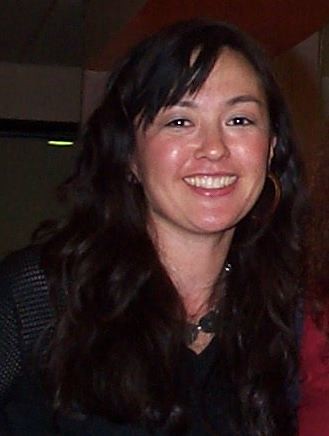
In January 2001, singer/songwriter/bassist Sachiho Kudomi was vacationing on the Big Island of Hawaii with her rock star husband, Donto, and their two young sons. While they were watching a performance of a hula dedicated to the goddess Pele at Hawaii Volcanoes National Park, Donto suddenly fell over, and was rushed by ambulence to the Hilo Medical Center. The next day he was pronounced dead from a brain anurism at 38 years of age. Sachiho decided that Pele wanted to keep him as her own.

Sachiho returned to Hawaii Island a year later for a memorial service at the largest Buddhist temple in Hilo. Several dozen of Donto’s fans flew over from Japan for the service, which featured a musical performance by Sachiho’s all woman trance music band, Amana.

In between the times I recorded Music from Living on the Earth (January 2000) and Living in Hawaii Style (spring 2001) at Sea-West Studios in Pahoa, Hawaii, Sachiho recorded the CD “Rainbow Island” there with world beat band Umi No Sachi, and noticed owner/engineer Rick Keefer’s copy of Music from Living on the Earth.  She immediately recognized the cover of Living on the Earth. “Oh!” she exclaimed, “Very famous book!” Rick put us in touch by email, and the next thing I knew, I was organizing a Hawaii Island concert tour for Amana to follow the memorial service for Donto in Hilo. I had worked hard on the publicity, and we had large, enthusiastic crowds at every show.

Hiromi, the percussionist, also invited Toshi and Masaha, the members of her other band, Dinkadunk, to play between Amana’s sets. Hiromi learned to drum in Africa (and her daughter Tapiwa is half Zimbabwean).
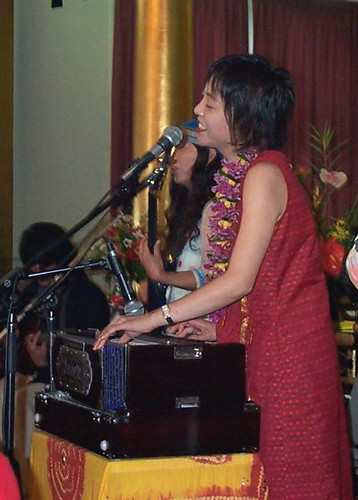
Yoko Nema sings and plays instruments from India, where she goes often to study Indian music and buy merchandise for Tata Bazaar, her gift store in Naha, Okinawa.

About a dozen of Donto’s fans followed us from venue to venue, attending every concert. A couple of them brought their copies of Living on the Earth (Japanese edition) for me to sign. One night I performed one of my autobiographical story shows, and Toshi, whose interpreting skills are excellent, translated my entire show into Japanese for Donto’s fans as I was telling it.

The three band members all brought along their beautiful, happy, elementary school age children, who never squabbled, screamed, made demands, complained they were bored, or refused to eat what they were served. For an entire week I observed these amazing children, harmoniously playing together or quietly playing alone, utterly unlike almost every single child I’d ever met in the USA.

The band and their families stayed in a big rental home near the oceanfront volcanic warm ponds in lower Puna. When we traveled to the other side of the island, we camped out with friends of mine who have a botanical garden in Captain Cook. We had as much fun as friends can have together in a week’s time, making music together, laughing, sharing stories and meals.

I am looking forward to traveling with Sachiho and her band again in Japan some day!  (Note from 20 years later: I did twelve concert tours in Japan, from 2006 to 2019, and almost all of them included collaborations and family reunions with Sachiho, Hiromi and Yoko.)

CD Cover Digital Layout

On Thursday night, April 6, 2006, I met with James Lee, the graphic designer who helped me with the digital layout of my second CD, Living in Hawaii Style, in the spring of 2001. James works expertly with Quark Express, Photoshop and Illustrator, plus he knows how to repair computers. He’s been working the graveyard shift at Wilcopy on Wilshire Boulevard in Los Angeles for many years, but that will end soon. By the end of this year he’ll have graduated a college course in video game design, and I will have to find a new digital layout expert for my next printed project.

I had already painted the cover art for What Living’s All About and had it scanned, created the lettering on Duralar (translucent graphic overlay film) with a fine point Sharpie marker, gotten the back cover black and white head shot of me scanned into a tif file, composed, and editted the liner notes, obtained a bar code, and decided that the back cover of the booklet would be a close-up of the center of the cover painting. I had researched at length online the various companies doing CD duplication and had chosen one that offered me a good price and was highly recommended. I had downloaded the templates for the booklet, traycard and disc from the website of the manufacturer, A to Z Media.

James scanned the lettering overlays, converted them from black to white, and placed them as a layer over the scan of my cover painting, and added bleed borders (extensions of the existing colors at the edges, so that when the cover is trimmed, there will be no white edges if the trim is off by a fraction of an inch.)

For the back cover, we began with a background of a scan of a color wash I’d painted with acrylics. Over that James placed the scan of my head shot, which he changed from black and white to indigo and white. He added the lettering overlay of the song titles, also changed to white, and, below that, the bar code and UPC number. He also selected a star from the front cover and I chose where to clone it five times on the back tray card. Then we created the lettering for the two spines in Comic Sans font (which has a handlettered look) in white.

Inside the booklet are ten black and white pages in (very small) 7 point Times New Roman lettering; we had to go small to squeeze in all of the lyrics, acknowledgements and stories that I wrote for the liner notes. We worked for quite a while moving words around so that none of the lyrics require turning a page. It’s a very simple layout, but very legible.

Last, we made the layout for the disk. It, too, is indigo (scanned from a painted acrylic wash) with silver stars and white lettering. For the disk, the ink colors are chosen specifically from the Pantone ink chip book.

James then created a high quality print of the cover art, to size, and cut them out for me, so that I could put them in a CD jewel case and see how the finished product will look. A complete mock up goes with the digital layout on CD to the manufacturer.

I left Wilcopy with three CDs and three mock ups: one set to send to A to Z Media in New York, one set to send to EM Records in Osaka, Japan, and one set to keep as a safety backup.

Middle Eastern Beet Dip

Benida Solow made this for a party last winter, and gave me the recipe when I asked. Of course I asked—I love recipes that feature beets.

It was originally posted on the fabulous Stonyfield Farm website by Jodi Calhoun. My only personally preferred change to this recipe would be to use vegan yogurt instead of cow’s milk yogurt.

Middle Eastern Beet Dip

4 peeled, cooked beets, coarsely chopped
1 cup yogurt
2 cloves garlic, peeled and minced, or pressed
2 teaspoons lemon juice
lemon zest (finely grated rind)
2 tablespoons olive oil
1/2 teaspoon each cumin, paprika and cinnamon
salt and pepper to taste

Combine all ingredients until smooth in a food processor.

Serve with crackers, flat breads, and/or raw vegetables. On the same tray, at the party where Benida served this, was a spreadable chevre (goat milk cream cheese) to smear on a bit of bread or vegetable before topping with a bright magenta dollop of beet dip.

Storyteller Jeff Gere

Jeff Gere blends talents as painter, puppeteer, and mime, into performances which have electrified Hawaii and mainland audiences of every age for twenty years. Jeff’s animated physical energy, wide range of voices, morphing elastic face and clear characterizations make his shows unforgettable events. Jeff becomes his stories!

Jeff is the Honolulu Parks Department’s Drama Specialist. He directs the Talk Story Festival, Hawaii’s biggest storytelling celebration. He creates/hosts Talk Story Radio, a weekly Pacific storytelling show. Born on Halloween, Jeff has three ‘Haunted Hawaii’ CDs of true supernatural tales. Recent tours include Arizona, Hong Kong, Vancouver and Turkey.

Jeff’s repertoire is voluminous. His Arabian Nights Series ran 18 months in Honolulu’s Chinatown. He creates shadow puppet shows. Jeff tells to thousands of Oahu park kids each summer. Commissions include interpreting Egyptian mythology, and becoming Van Gogh’s Ghost. His ‘Art Off the Wall” Series interpreted The Contemporary Museum exhibits for three years.

Mom’s Mid-century Modern

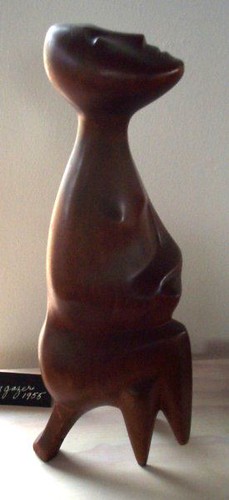
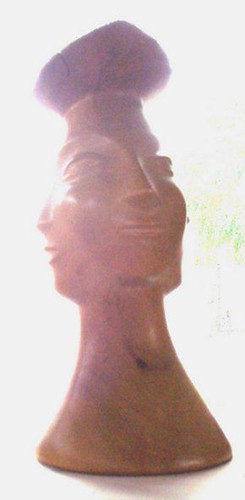
My mother, Verna Lebow Norman, has sculpted prolifically, beginning in her mid-teens in the 1930’s. Mostly, she has worked in clay, but, in the ‘40’s and ‘50’s, she carved wood often as well. Her mid-century modern pieces intrigue me especially, even after having known them almost all of my life.

The Moongazer

The Devil

The Boddhisattva

The Cat

The Gospel Truth of What Living’s All About

On November 20, 2005, at Architecture, the recording studio of Scott Fraser, in the Mount Washington district of Los Angeles, an amazing collection of musical minds collaborated in recording of my three original gospel style songs, “Doctor Sun and Nurse Water,” “Sometimes It Takes a Long Time” and “Love, Understanding and Peace,” for my CD, What Living’s All About, released in May 2006. Artist/photographer Hoshi Hana took all of these photos, except the ones of Scott and of Mari, which I took.

First, meet Jessica Williams, powerful rhythm and blues singer and leader of one of the choirs at the Greater Ebenezer Missionary Baptist Church. She hired the other singers, participated in creating the arrangements, and hired the pianist, Reverend Harold Pittman, minister of music at the same church. Her fabulous improvised vocal solos grace both “Doctor Sun and Nurse Water” and “Sometimes It Takes a Long Time,” and she delivered a fierce and tender oration on “America the Blues.”

Jessica’s choir on my CD includes her daughter, Vetia Richardson, and her friend Irene Cathaway, with whom she sings backup for Connie Stevens. We recorded the singers five times on each song to create the sound of a full choir.

Jessica’s gospel keyboard specialist, Reverend Harold Pittman.

Our bass player, Kevin O’Neal.

Our drummer, David Anderson.

Here I am, wailing with the band.

Ron Grant, my co-producer, works as a film composer. He made all of the music charts for the songs, collaborated on the arrangements and instrumentation, and sometimes conducted the choir.  He’s got an Oscar and an Emmy on his shelf.

Scott Fraser, recording engineer and live audio engineer for the Kronos Quartet, worked with all of us from a viewpoint both technical and compassionate. Scott was nominated for a Grammy in 2006 for a recording he co-produced.

Our intrepid photographer, Hoshi Hana, creator of spiritually inspired photocollages and other amazing artworks.

Feeling Good

These are paintings I made a year ago in Tracy Dove’s studio. They relate everything I know about feeling good:


Breathe deeply and let it all go


Focus on compassionate love


Connect to your Divine Spirit


Move in escstatic communion with nature

Lessons from Katrina

Have we learned anything from Hurricane Katrina?

Consider this, from an article by Laurie Becklund in the California Monthly, a UC Berkeley alumni magazine, in the December 2005 issue.

Two thirds of California’s fresh water, and most of Southen California’s drinking supply, flows through the Sacramento-San Joaquin Delta, a network of sixty islands and peninsulas six times larger than New Orleans that is protected by 1,100 miles of fragile levees, originally built with shovels in the nineteenth century, and not significantly improved since then.

UC Berkeley professor of geo engineering Ray Seed says that instead of raising money to fix the problem, politicians have periodically funded studies, despite reports of $100 million in damage caused by levee failures in June 2004 after routine maintenance budgets were slashed.

A major quake in the Bay Area could cause salt water to pour into the delta, effectively destroying the fresh water supply for Southern California, other than emergency supplies from the Colorado River. Not even good levee maintenance would prevent this; an emergency trench through the center of California is Seed’s most likely solution.

In terms of the national budget, Seed hopes that the debate over Katrina will create a swing back to funding civil engineers. Or as he ironically puts it, “Mechanical engineers get paid to make weapons; civil engineers get paid to make targets.”

Lava Walk


Sunset at Chain of Craters Road, Hawaii Volcanoes National Park

Straight from the heart of the earth, lava streams up as the beginning of islands and continents. It smells like fireworks: sulphur. Lava is rock being river, cascading into the sea. In Hawaii, lava symbolizes the goddess Pele, passionate sculptress and dancer. Some say she lives in Halema’uma’u crater on the Big Island of Hawaii. Those who know her well bring gifts of gin and ohelo berries, which they toss into the steaming caldera with prayers of respect.

If you dare to walk in the dark over dangerously uneven lava shelves with a flashlight, and you have sturdy shoes that you are willing to sacrifice (because sometimes the heat of the lava river coursing ten feet under the trail can cook the glue holding your shoes together), take a seaside walk after sunset at the bottom of Chain of Craters Road in Hawaii Volcanoes National Park to some place you decide to stand in the dark and watch neon bright streams of lava flow down the mountain and into the sea.

You will not be alone, but, rather, on a pilgrimage with thousands of others, almost any night you go. Not everyone wants to walk all the way to the edge of the cliffs, because sometimes the lava cliffs break off into the sea. But some people always do.


Moonrise over the ocean at Chain of Craters Road. Note lava on the left.