10 oz extra firm organic tofu, cubed
4 T nutritional yeast flakes
4 T organic extra virgin olive oil
1 T dulse flakes
1 tsp. dried or fresh dill weed
2 tsp. ume vinegar or half of a pitted, pickled ume (plum), minced
Blend well and turn out into a festive dish. Serve with whole grain crackers and/or bite-sized raw vegetables.
Tonight Jack and Kay Enyart brought me to the Downtown Artists Space in the Los Angeles Downtown Arts District to record a webcast interview for Art With Enyart, Jack’s bi-monthly show for LA Artstream.
Meet Jack Enyart, animation artist/writer/agent/consultant, my friend since junior high school, and host of the show, and Jonathan Jerald, producer of LA Artstream, Mark Walsh, our director, and Kay Enyart, soon to be head of the pattern-making department at the Pacific Design Center’s Academy of Couture. Jonathan turns out to have visited or lived almost every place I have visited or lived in the San Francisco Bay Area in the late 60s and early 70s. Amazing that we never met before.
Twilight in the first floor of the Downtown Artists Space.
DAS’ classic artist loft kitchen
I sit with Jack on the set for soundcheck. I am wearing the Living on the Earth illustration print dress that Tokyo fashion designer Aya Noguchi made for her autumn line in 2007. The interview was fun, and, at the end, I played on guitar and sang “Sometimes It Takes A Long Time,” one of my original songs from my CD What Living’s All About.
I’M LOOKING FOR AN AFFORDABLE ORGANIC WEDDING CAKE; CAN YOU HELP ME??
NEED HELP ALETA
What makes a wedding cake a wedding cake is the icing. You could make or buy a simple cake made from organically grown ingredients and then pay a professional to ice and decorate it for you. OR you could ice it very simply with white icing yourself, and garnish with fresh flowers (make sure they are not from poisonous plants like plumeria or oleander). Dendrobium orchids, pansies, hydrangea, rosebuds, and leatherleaf fern are favorites of mine for this. They should match the colors in your bouquet, so you can put the bouquet on the table near the cake when you do your wedding photo of the cake cutting. Or, you could decorate the cake with sugared fruit, as my permaculture teacher friends Ryan and Tara Holt did for their eco-wedding (see photo above).
My mother taught me the secret to icing a cake on the serving plate, without getting icing on the plate: tear waxed paper into long triangular pieces, and lay them on the plate before you place the bottom layer of the cake on it. The long narrow points go under the cake. You want to have all parts of the circumference of the cake layer resting on pieces of waxed paper, and all of the plate protected by the widest parts of the triangles of waxed paper. Apply the icing with a flat spatula. When you have iced the entire lower layer, place the next layer on top of it, and ice that. Continue until you have coated all of the layers with a smooth, flat layer of icing. When you are done icing, carefully remove the triangles of waxed paper, one by one. Then you can add the sugared fruit or edible fresh flowers.
One way to save money on a wedding cake if you are having a big reception is to have the person baking the cake make a small tiered wedding cake (a 6” tier on top, a 10” tier underneath) to pose with in the cake-cutting photos, and make sheet cakes of the same batter and icing to feed the guests. You’ll get less than 30 servings from the two tiered cakes, depending on how the server cuts it. On 10” or bigger cakes, make a circular cut 3” in from the outer rim of the cake, and cut pieces from this outer section before you cut up the inner 4” diameter piece into 3 sections. Your tiered cake will look more elegant if it is presented on an elevated cake stand. You can buy the pillars to separate the layers at a floral supply store.
My very favorite organic wedding cake during the 11 years I had the wedding business was baked from an original recipe by organic pastry chef Diane Burr on Maui. It was a special order from a couple who wanted everything natural and organic (most of my clients didn’t care what was in the cake as long as the icing was perfect). The cream cheese, honey and vanilla icing didn’t look that great, but she dressed it up by garnishing it with fresh dendrobium orchids and leatherleaf fern. Inside, the cake was divine. Diane calls it her Jungle Cake. She added chopped fresh ripe mango, chopped dried pineapple, fine coconut shreds, chopped macadamia nuts, thinly sliced banana, chocolate drops, chopped candied ginger and ground cinnamon to some kind of rich cake batter and baked it in three pans of different sizes. I wish I had the recipe!
Congratulations on your engagement, Aleta, and thank you for going organic!
Quinoa (pronounced “KEEN-wah”) is a good-tasting high-protein grain of the same family as amaranth.
Here’s how to make a simple vegan dish I like:
Steam a variety of vegetables together until fork tender. Tonight my mixture is: three broccoli crowns cut into branches, three broccoli stems, peeled and cut into half inch sections, one big carrot, scrubbed and cut into half inch sections, one big parsnip, scrubbed and cut into half inch sections, one big yellow onion, peeled and cut into one inch sections, and two yellow patty-pan squash, washed and cut into bite-sized pieces.
Some other possibilities are brussels sprouts (stemmed and cut in half), zucchini (washed and cut into half inch sections), string beans, washed, ends trimmed off and cut in half, crookneck squash, washed and cut into half inch slices, red or white cabbage cut into bite-sized pieces, or cauliflower, broken into flowerlets.
Set aside the steamed vegetables and save the cooking water separately.
Quinoa is cooked at a proportion of one part grain to two parts water. One cup of dry quinoa makes enough for two generous servings. For three people, for example, use one and one half cups of quinoa and three cups of water.
Measure the dry quinoa into a large strainer and let cold water run over it until it stops bubbling. Place the quinoa into a pot (use a 2 quart sized pot for 2 to 4 servings) and measure the vegetable cooking water into the pot. Place the cover on the pot, bring it to a boil, and turn the heat down very low and let the quinoa cook until all of the liquid is absorbed (10 to 15 minutes).
Turn the quinoa out into a large festive serving bowl, pour the steamed vegetables on top of it and toss gently. At this point you can season it according to your preference, or let each person season his or her own portion. I like a little organic extra virgin olive oil and Bragg’s Liquid Aminos on mine, but others might prefer tamari, gomasio, toasted sesame oil, sea salt, or parmesan.
One pound green lentils, soaked overnight, drained and rinsed well
One large yellow onion, peeled and cut into large pieces
Two large carrots, scrubbed well and cut into thick slices
Five cloves of garlic, peeled and chopped
A bouquet garni cotton cloth bag containing one bay leaf and sprigs of parsley, oregano, and basil leaves
One pound whole grain pasta (brown rice or quinoa pasta for gluten-free eaters) cooked and drained according to the directions on the package.
Four heads of broccoli (about 5 or 6 inches across the heads), rinsed, cut into bite sized pieces, and steamed until fork tender. (Peel the stems before you cut them into cubes)
1 1/2 cups good quality marinara sauce
3 tablespoons of organic extra virgin olive oil
Place the lentils, onion, carrots, garlic and bouquet garni in a slow cooker (Rival Crock Pot, for example). Cover with pure water plus one inch. Turn the cooker on high until the soup boils, stirring occasionally so the lentils don’t stick to the bottom of the pot, then turn it to low and leave it on for eight hours (overnight) or until the lentils and vegetables are very tender. Remove the bouquet garni bag. In a large soup cauldron, gently blend all of the other ingredients with the lentils and vegetables.
What I like about this soup is that the broccoli is freshly steamed and the pasta is cooked al dente, rather than either being boiled to mushiness in the soup, and the olive oil has not been heated, other than by adding it to the soup at the end. The other thing I like about this recipe is that the lentils, having been soaked and rinsed, are much less likely to give you gas, even when combined with broccoli.
Each bowl of soup can be optionally enhanced according to the tastes of the person to whom it is served, with seasonings such as ground black pepper, hot sauce, Bragg’s Liquid Aminos, Himalayan pink salt, sea salt, flake-type nutritional yeast, or grated parmesan cheese.
I like to make extra and freeze it for a quick meal later in the month.
This soup could be lovely served with hot bread, a green salad, and/or an entrée, but, personally, I find one bowl is a whole meal for me.
Here’s an eggnog so healthful you can drink it all year long!
For each serving add:
1 cup unsweetened coconut, almond, hemp, or cashew milk, chilled
1 peeled ripe banana, fresh or frozen, cut into 1 inch sections
1 tablespoon agave syrup (or less if you like)
A pinch of nutmeg (or more if you like)
Place in a blender jar and whir until creamy and smooth. Serve in festive glasses.
Salud!
Note: David Little, the holistic healer who taught me this recipe, liked to add a squirt of Renshenfengwangjiang, a ginseng and royal jelly syrup (“as the booze”).
My writer friend, Pamela Beth Raffalow Grossman, from New York City, just posted this today (December 23, 2018):
Just want everyone to know that Alicia Bay Laurel’s wonderful vegan eggnog has been a big hit I’ve brought to 2 holiday parties this year, and counting (and in past years too). Per one serving: One banana; one cup almond or some such kind of milk (oat, soy); some agave syrup; and a sprinkle of nutmeg. Basically, combine these ingredients in a blender in proportions that look good, and blend; it’s hard to screw it up, though one time I added a smidge too much nutmeg. Delicious; not too unhealthy; does not make you feel like you might puke, like regular eggnog can. Spike as desired. Thank you, Alicia!!!!!!!
I’m telling you. It’s eggnog without the “What the fuck did I just do to myself??”
Replies author Kristy Eldredge:
It is fabulous! As addictive as real eggnog but no horrible repercussions, like Pam says.
I come to Kurkku’s complex in Haragyuku for an interview by Switch Magazine, that will be a conversation between me and Japan’s beloved novelist Yoshimoto Banana (last name first is customary here, and her first name is pronounced BAH-nah-nah.)
In spring 2008, Kurkku hosted the first of what became four art shows of the original drawings and page layouts of Living on the Earth. I was delighted to hear that Banana-san had purchased my self-portrait that appears on the epilogue page of the book. She’s 15 years younger than I am, and the book was a favorite of her childhood. So, she said, she felt almost in a dream to purchase this drawing she had gazed upon so long ago.
Fujii-san, a rock and roll producer who is a friend of Banana-san’s and a friend of Keisuke Era’s (he’s the director at Kurkku) offered to introduce me and Banana-san, and Switch Magazine offered to document this event. So, here we are: Takeshi Fujii, Yoshimoto Banana, me, Miho Kawaguchi (writing for Switch), Kaori Miyagi (translating for me) and Kengo Tarumi (taking photos for Switch).
OMG! We showed up wearing the SAME EXACT T-SHIRT! It’s the Being of the Sun illustration licensed by Aya Noguchi (fashion designer and owner of Bed and Balcony) last year for her summer line.
But that wasn’t the only coincidence. After the interview was over, Banana went out to the street and there stood our dear friend in common – Sandii Manumele, vocalist extraordinaire and hula teacher of hundreds of Tokyo students, including Banana. Sandii rushed upstairs to see me and we had a happy group hug.
I had last seen Sandii at a huge rock concert memorial for Donto in Okinawa City in 2006. She danced and sang in the show, and I sang one of my songs, too. We became instant friends.
Sandii choreographed the hula for Donto’s classic song “Nami,” which women all over Japan love to dance. I just recorded “Nami” on my recent CD, Beyond Living, both in the original Japanese lyrics, and also in a Hawaiian and English translation. I was happy to present both Sandii and Banana with signed copies of my new CD.
Here‘s Banana-san’s blog about the same meeting (in Japanese).
Today I meet Liane Wakabayashi, the artist who will host my bookmaking workshop on October 18th. She wanted to meet me and see what I do, and rode up to Fujino on a train from Tokyo. We instantly become good friends. She’s from New York, and tells me she’s one of a half-dozen Jewish women married to Japanese men living in Japan. Maybe we are cousins. Behind us is the entrance to Steiner School’s brand new auditorium.
We head over to Fujino’s Steiner (Waldorf) High School, which meets in a geodesic dome built by the staff and students a few years ago. The high school students commute an hour by train from Tokyo, where the former Steiner High School has closed. I am about to meet the 12th grade English class (7 students) that day. The elementary school students use the building in the background, which is a former public school that closed due to shrinking population in the mountain town. The Steiner staff refurbished it, and the number of students is steadily growing.
One gets the feeling this is no ordinary high school.
Today I am teaching lesson #1, “Instant Books,” from my friend Esther K. Smith’s fabulous book, How To Make Books. An instant book can be folded from almost any size oblong piece of paper, with a slit cut in the middle so it can be refolded to be an eight page book, or a six page book with front and page covers. This is the cover of the instant book I made during the class.
I am not allowed to photograph the students, so I sketch them in my instant book. These seventeen-year-olds were raised on origami (Japanese paper folding) and instantly grasp and master the simple but ingenious design of the book.
The kids brought stacks of magazines, mostly fashion magazines, to cut out and write about the photos, hopefully in English. They relish the task of cutting out photos that appeal to them, and chat happily in Japanese while they are doing this. So, I use a few of the magazine images, to represent the presence of this alternate reality in our classroom. Yay recycling!
I daub on a little watercolor paint to add texture and color to my ink drawings. After we are done with our books, we will unfold them, scan them, and make color copies for each of the students and the staff in our class. Hooray for self-publishing via computer. The power of the press is in the hands of the artists! Later that day, Esther emails me from New York City, to suggest that the scans be posted on the web, as a sort of international publication that people can download, print and fold. She collects instant books.
I copy an idea from one of the projects in Esther’s book, of using photographs of eyes to add emphasis to the idea of reading and observing to the back cover of my book.
Here’s one of the student books I love, a new twist on the fairy tale of the princess and the frog. I get a kick out of the way she used magazine fashion models to depict the characters in her story.
She’s pretty clear about why she wants a man in her life, and who he should be.
But when the proposal arrives (almost immediately!), who brings it? A little bug-eyed green guy from another planet! But our heroine is not daunted.
For her positivity and willingness to look past mere appearances, she is rewarded with a commitment from the man of her dreams.
So, they live happily ever after.
Here is Liane’s book. She is welcoming me to Japan and suggesting I wear comfy shoes. I agree; one does walk a lot here, taking trains instead of driving.
Here is a book of legs and shoes, with lots of excellent English words in it. The students were still working on their books at the end of our allotted two-hour period, exclaiming loudly that they did not want to stop creating their books to do other schoolwork. I therefore consider the workshop a success. Happily, their regular teachers agreed.
After the class, Liane and I enjoy a beautiful lunch prepared by Jun on the verandah of Setsuko and Jun’s house with Setsuko and Yuko Urakami, the teacher of the 12th grade English class who kindly organized my visit to the school. I want to connect Yuko with the staff of the Haleakala Waldorf School on Maui, where I taught music and creative writing, part time, for a school year in the 1980s. The students in the two schools could become pen pals on the web, and maybe even visit one another. Those purple fruits are giant figs from a tree next to Setsuko and Jun’s house.
Yuko made a book, too, called “I believe in…” She believes in the power of flowers, in hand crafts, in “a bit of luxury” and good food. Amen.
I am the guest of TV producer Setsuko Miura, her husband Jun and their daughter Ren, in the very hip art and farming village of Fujino, in the mountains west of Tokyo. They have arranged for me to teach a class in making instant books at the local Waldorf School, which they helped to found, and which Ren attends. They also arranged a fundraising concert for the school at Shu Café in Fujino, at which I perform for about 50 people. In this photo, Jun and Setsuko are the two people with headscarves. Shu and his wife Kazu, the owners, are on either side of me. Kazu has purple hair and a very small dog in her arms. The other three ladies are part of the café staff.
Shu Café is downstairs from an airy loft that is Shu and Kazu’s home. Next to it is an organic garden where Shu grows vegetables for the café.
The elegant and natural café and residence were designed by Tsutomu Nozaki, the same architect who designed Jun and Setsuko’s ultra-green home, here enjoying a beer with Jun.
An easel outside the main café entrance announces my concert.
A small gift shop inside the café includes organic cotton socks, hand dyed with locally grown indigo and hand-knitted by a 90-year-old resident of Fujino.
Every aspect of the café features local art and organic produce, including the stepping stones at the entrance to the café.
Setsuko and Jun’s neighbor, Aki, one of the first of the audience to arrive, brought her long-out-of-print copies of the 1974 Japanese editions my three children’s books (The Rainbow Lady, The Family of Families, and Sylvie Sunflower) to sign for her and her children.
I met legendary singer/songwriter Ua, who lives in Fujino with her husband and two young children.
I sang and told stories, with the excellent translation of beautiful Yuko Urakami, the English teacher at the Waldorf School to whose 12th grade English class I taught the instant book lesson on September 24th. She also has children who attend the school, and is a close friend of Setsuko’s.
We had a full house, a most enthusiastic audience, except for the children seated in the first three rows, who were outside playing together.
After the show I signed books and CDs, and got my photo taken with lots of new friends. Everyone was so sweet.
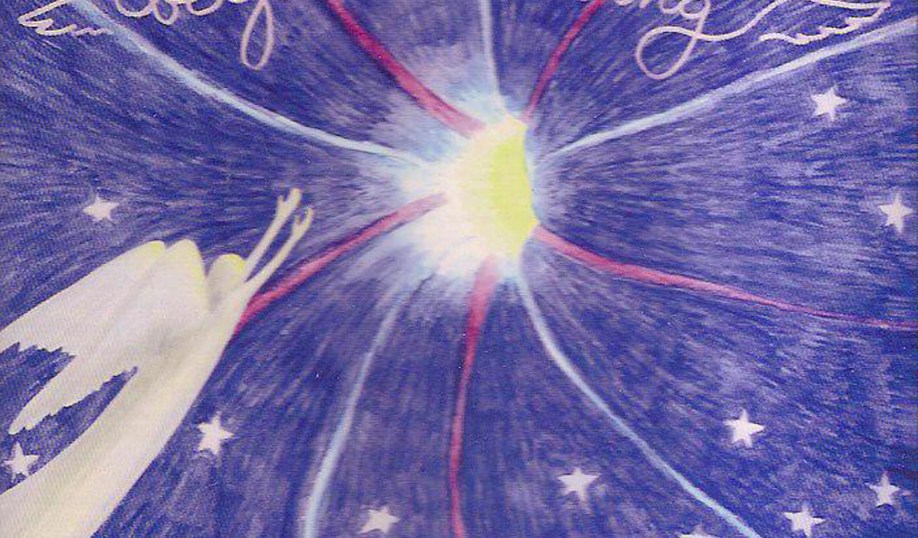
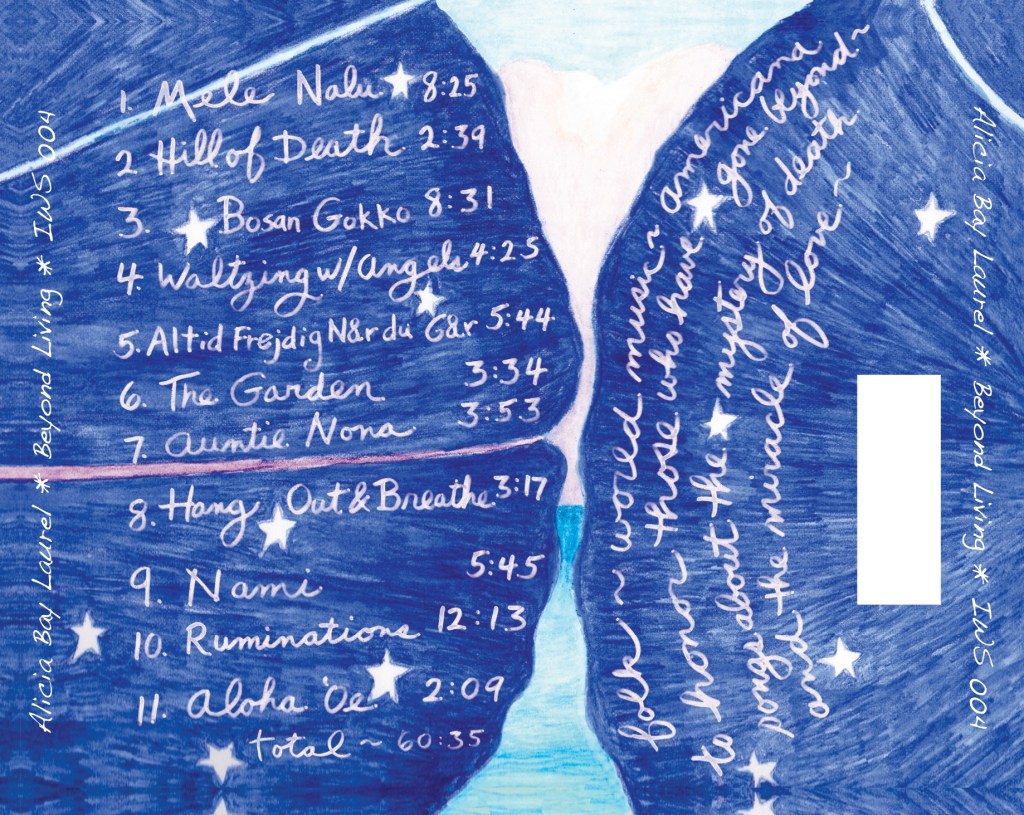
As the title of this album suggests, Beyond Living is a collection of folk songs about death, many of them written by musicians who have passed. Alicia Bay Laurel, known for her 1971 guide to sustainable living entitled Living On Earth, collected and recorded many of the songs on this album in response to a number of deaths she encountered in recent years, including, most notably, legendary Japanese singer-songwriter Takashi Donto Kudomi, who died in 2001 at a hula performance. Songs from artists from several countries round out this decidedly international album.
While the album’s theme might suggest darkness, the album feels more like a celebration. As Laurel’s liner notes suggest “lyrics about death contain valuable instructions for living,” and these songs are no exception. Their cheery melodies, vocals, and a fingerpicked guitar mix with deep sadness in the manner I associate with children’s songs (Remember when you found out “Ring-Around-the-Rosie” was about The Plague?) The album invites the listener to engage with the certainty of death and to feel the relish that reality brings to living. Much like listening to the blues, listening to these songs provides a deep and pleasurable access to human emotion.
Review by multi-platinum-selling singer/songwriter Joe Dolce in his weekly newsletter, sent 09-25-09:
What I’m Listening to This Week ‘Beyond Living’ – Alicia Bay Laurel. This is the most recent release of my friend, Alicia Bay Laurel, with whom Lin Van Hek and I will be performing with in Okinawa and Tokyo next month. Alicia is one of the few real visionary freaked-out flower children from the 70s who has grown even further into the great dream of the Beloved Community that we all shared back then. She also had a Number One hit, so to speak, in her 20s, with a New York Times best-selling book, Living on the Earth, which changed her life, and it is an inspiration to know someone who continues to reinvent herself – without disowning her past.
Alicia and I were also both close to, and sang with, the girl who introduced me to California hippie communes back in the 70s, Janet ‘Sunny’ Supplee, and the spirit of Sunny hovers throughout this recording. Sometimes, listening to Alicia sing, I swear Sunny is in the building. Sunny and I sang together for a couple of years and she certainly influenced me in an unforgettable way. She was killed in a car crash in Maui and I still miss her.
Beyond Living collects a master’s bouquet of beautiful songs about Death that do not drag death down into the valley of shadow and fear where old time religion would like to keep it penned up, but releases it out into the empowering light and flight of warm meadows and possibilities. Alicia has included the song I wrote and sang at my own father’s funeral, Hill of Death, with lyrics by Australian feminist pioneer, Louisa Lawson, drunken Henry’s mum.
While in LA, I was lucky enough to be able to sing and play with her on this recording. I was surprised at first when the tasty, awesome, I-am-the-Fingers-of-God mandolin part I had recorded was nowhere to be found in the final mix, but after a couple of listens, I understood why it went to the cutting room floor (along with Satan, Everlasting Hell and the Edsel.) It’s not necessary. Alicia’s last album, What Living’s All About, was an eclectic brew of styles, electric guitar solos, even rap – but this one, a unique fusion of Hawaiian and Japanese sensibility, is smoothly unified by the continuity of Alicia’s lullaby-like singing and precision finger-picking guitar, the latter most notably in the fifteen minute closing instrumental, Ruminations, which is a collage of no less than fifteen tunes: Amazing Grace, The Garden, Is This Not the Land of Beulah, Will the Circle Be Unbroken, Oh Come Angel Band, Gathering Flowers for the Master’s Bouquet, Angels Are Watching Over Me, This Little Light of Mine, Swing Low Sweet Chariot, Bosan Gokko, Hill of Death, Long Black Veil, Good Night Irene, We Shall All Be Reunited, and Kumbaya – and leading to the final Hawaiian, Aloha Oe’. I wouldn’t mind at all having these fifteen minutes playing in my final hour.
There are also three tracks written by Takashi Donto Kudomi, a legendary Japanese new wave rock star turned spiritual singer/songwriter, who died mysteriously on January 23, 2001. He, his wife and their two young sons were watching a hula performance dedicated to Pele, the volcano goddess, at Hawaii Volcanoes National Park. At the end of the final chant, Donto fell to the ground unconscious, and was rushed to the hospital. The next day he was pronounced dead at age 37 from a brain aneurism. He had been in perfect health until that day. We will be staying and singing with Donto’s widow, Sachiho, in Okinawa, at Donto-in, the temple Sachiho built in his honor.
One of my favourite tracks is the quirky Altid Frejdig Naar du Gaar (Courage Always When You Walk) with melody by C.E.F. Weyse, 1838, lyrics: Christian Richardt, 1867, set into verse by Alicia. It is often sung at funerals in Denmark and is faithfully sung here in Danish. Just voice and stand-up bass, played masterfully by Chris Conner and reminiscent of her great version of Nature Boy, on What Living’s All About, the vocal seems to float in and out of ordinary tonality like a ghostly dandelion puff. One day, I do hope Alicia gets a chance to put out an album of just vocal and stand-up bass recordings, as they are always a pleasure, and a challenge, to listen to.
Review by Gerald Van Waes, host of “Psyche Van Het Folk” (a psychedelic folk radio show in Antwerp, Belgium) on his website, November 20, 2009
Alicia Bay Laurel : Beyond Living (US, 2009)
A bit different from Alicia’s previous albums, this is a conceptual piece of songs to be meant as a tuning in to a spiritual good vibration and feeling, on moments when people have passed over. When Alicia suddenly saw many related and befriended people pass over, it seemed as if she had no other option but to give all this an accompanying meaning; she started to collect songs from different countries to express this.
It starts strongly, with a Hawaiian opening chant which leads to a song inspiration, as a special moment (or person) to remember. The second song is an Australian folk gospel song, a folk version in which the backing vocals gives an Americana gospel feeling. Next we hear a traditional Japanese song, accompanied by harmonium and congas and vocals. Also this one has gospel flavours, reminiscent a bit of ‘Amazing grace’, being a more delicate, religious almost Christmas-sphere sphere. After its vocal parts with high voices (in Japanese), there’s some spoken word by Alicia giving more reference in the song. “Waltzing with Angels” sounds more like a country children song with a Hawaiian effect on the way the mandolin is played, with a happy feeling or energy. The song with original Danish lyrics by Christian Richardt (1867) is sung with a Marilyn Monroe song voice, and accompanied with bass only.
“The Garden” is again more countryesque, is sung with nice dual voices, leaving a Hawaiian feeling. “Auntie Nona” sounds like a happy children’s song, old music. The next small song has more religious Christian lyrics which appeal less to me. Also here gospel and country-flavours are mixed nicely. “Nami” turns back to Japan but leaves traces of Hawaii. On “Ruminations” we finally return to the “Amazing Grace” song, turning after a short while into a slow Hawaiian guitar medley on acoustic guitar. Also the last instrumental is a guitar piece with references to Hawaiian melodies.
Except as a dedication to the subject, the album is as much a dedication to spheres provoked from Hawaiian songs and music, to spirituality in gospel music, as quietly privately experienced music, and the fresh kindness of children songs, and a touch of country. All of this is omnipresent throughout with a happy inner strength and positivism towards life and thankfulness to people and their lives.





 Alicia Bay Laurel
You must be logged in to post a comment.